
Balance Is Deeply Affected by Shame. Nobody Talks About It
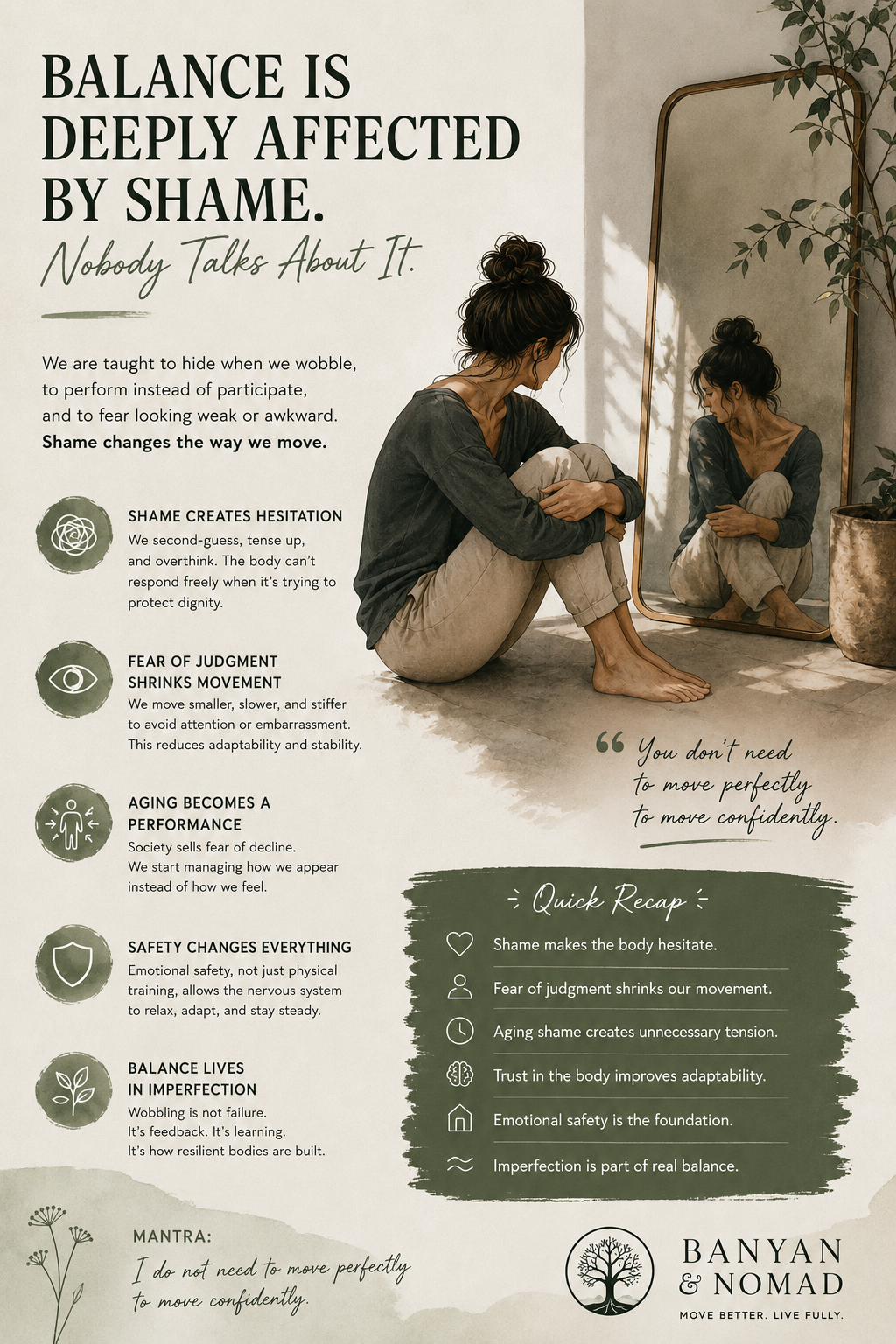
There is a conversation about balance that almost never happens in wellness spaces because it is far less marketable than exercises, stretches, or “five tips to prevent falls.” It is the reality that balance is not only physical. It is emotional, social, psychological, and deeply connected to how safe a person feels being seen inside their body.
I have worked with people for years, and one thing becomes obvious very quickly: many balance problems are not simply about weak muscles or aging joints. They are connected to hesitation. Embarrassment. Fear. Self-consciousness. The body changes when a person becomes afraid of appearing unstable, awkward, slow, heavy, old, uncertain, or physically incapable. And because modern culture quietly humiliates vulnerability at every stage of life, people begin hiding movement long before they stop being capable of it.
Adults Are Deeply Afraid of Looking Ridiculous
Children fall constantly and keep moving. Adults trip once in public and remember it for years.
That difference matters more than people realize.
Somewhere between childhood and adulthood, movement stops being exploratory and starts becoming performative. Adults begin managing how they appear while they move. They stop experimenting physically because embarrassment enters the equation. Suddenly there is concern about looking graceful enough, athletic enough, coordinated enough, young enough, attractive enough, controlled enough.
And once self-consciousness enters movement, balance changes immediately.
The body becomes tighter. Reactions become delayed. People stop trusting spontaneous movement because they are monitoring themselves too heavily. They become observers of their body instead of participants inside it. This is one of the reasons adults often move more rigidly than children despite having fully developed nervous systems and physical strength. Shame interrupts natural responsiveness.
Shame Makes the Body Hesitate
One of the least discussed effects of shame is hesitation.
The body second-guesses itself when it feels watched, judged, criticized, or unsafe. Movement becomes smaller, slower, more guarded. People start overcorrecting instead of responding naturally. They brace before stepping. They tense before shifting weight. They become cautious in ways that actually reduce adaptability.
And this hesitation is exhausting.
I often see clients who are physically capable of much more movement than they allow themselves to access. The issue is not always weakness. Sometimes the issue is fear of failing publicly. Fear of wobbling. Fear of looking uncertain. Fear of confirming their own insecurities about aging or capability.
The body cannot move fluidly when it is busy protecting dignity.
Aging Has Been Turned Into a Public Performance
Modern wellness culture talks endlessly about “aging well,” but underneath much of that conversation is panic. Panic about becoming slower. Less stable. Less visually impressive. Less independent. Less desirable.
People are not only afraid of losing balance physically. They are afraid of what losing balance symbolizes.
And because aging is constantly framed as something to resist, hide, delay, or outsmart, many adults become hyperaware of every physical change. They interpret ordinary shifts in coordination or energy as evidence that they are declining. Shame enters the body quietly through comparison.
I see this especially in women who have spent decades being valued for how effortlessly they appear to move through the world. The moment movement becomes less automatic, less invisible, or less aesthetically pleasing, they begin shrinking physically. They stop taking up space. They stop trying new movement. They become more cautious, which ironically accelerates the exact instability they fear.
Myth: People Lose Balance Because They’re Weak
Truth: Many People Lose Balance Because They Stop Trusting Themselves
Weakness is only part of the story.
There are people with relatively low physical strength who move confidently and responsively because they trust their body. And there are physically strong people who move with tremendous guardedness because they are terrified of making mistakes.
Trust changes movement.
When the body trusts itself, reactions become faster and more fluid. There is adaptability. Recovery. Curiosity. But when the body becomes emotionally afraid of instability, every movement starts carrying psychological weight. The person is no longer simply stepping, reaching, turning, bending, or balancing. They are evaluating themselves while doing it.
That constant self-monitoring interrupts natural coordination more than most people understand.
Social Media Has Made Movement Feel Performative
People now consume movement through cameras before they experience it through their own body.
That changes things profoundly.
Exercises are filmed. Yoga becomes aesthetic performance. Walking becomes tracked. Stretching becomes content. Even mindfulness becomes visual branding. People absorb endless images of polished movement and begin believing that movement should look graceful, effortless, and controlled at all times.
Real movement is not like that.
Real movement contains adjustment. Wobbling. Experimentation. Missteps. Recovery. But social media rarely shows recovery. It mostly shows performance. And over time, adults internalize the idea that looking awkward while moving is failure instead of part of learning.
This creates bodies that are more self-conscious and less adaptable at the same time.
The Body Shrinks When the Person Feels Ashamed
This is something I notice constantly and almost nobody discusses directly.
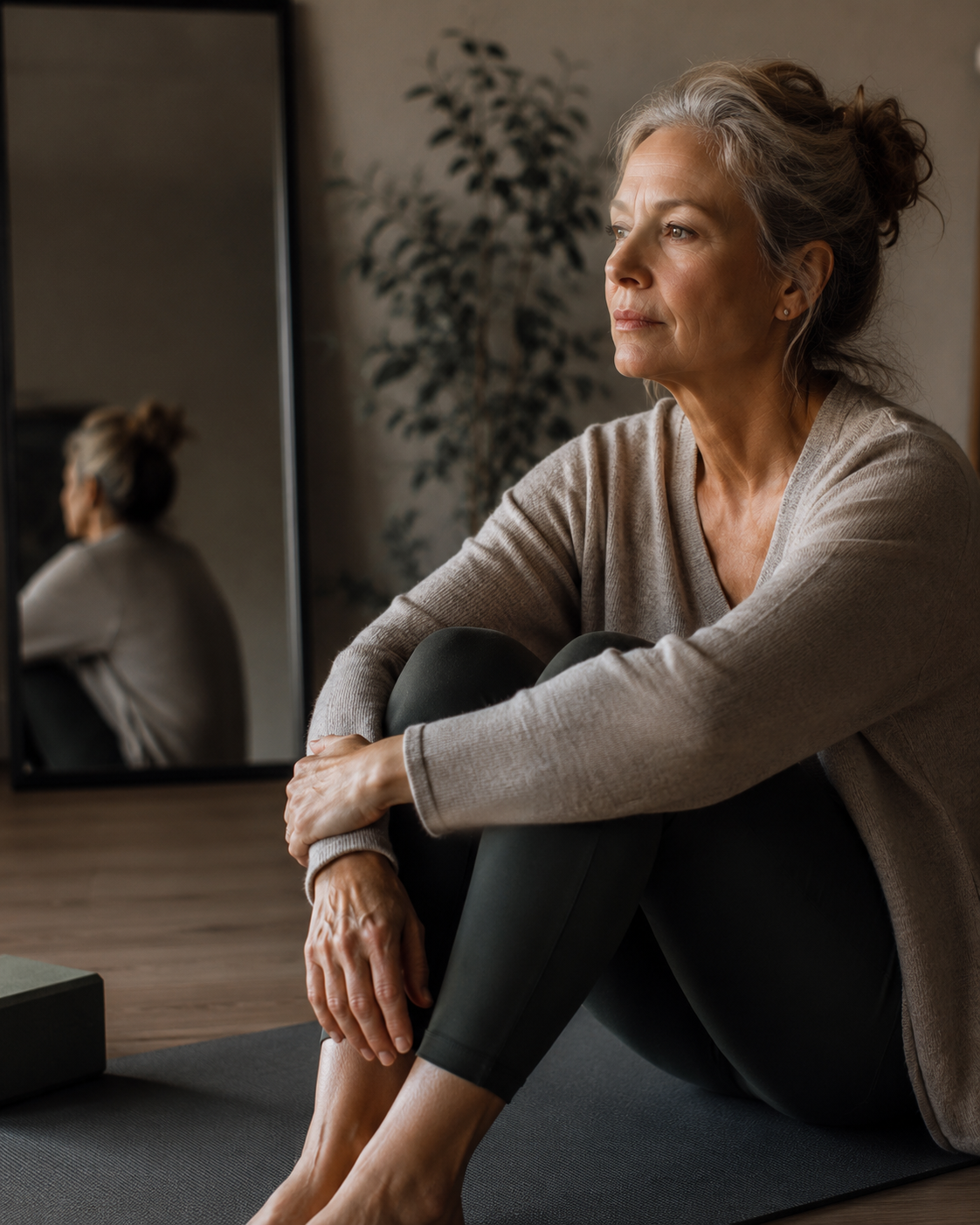
Shame changes posture. Shame changes breath. Shame changes gait. Shame changes spatial presence. People physically make themselves smaller when they no longer feel entitled to occupy space confidently.
You see it in the lowered gaze, the collapsed chest, the shortened stride, the held breath, the reduced arm swing, the reluctance to move expansively.
The body reflects emotional permission.
And when people feel embarrassed about aging, weight changes, injury, instability, lack of coordination, or visibility itself, movement becomes constrained. Not because the body is incapable, but because expression becomes emotionally restricted.
Balance Requires a Willingness to Be Seen Imperfectly
This may be one of the hardest truths for adults to accept.
Balance is not perfection. Real balance includes recovery. It includes wobbling. It includes recalibration. It includes moments where the body loses orientation briefly and finds it again. That is how adaptive systems work.
But many adults have lost tolerance for imperfection entirely.
They want movement to look correct immediately. They want certainty immediately. They want stability immediately. And when that does not happen, shame arrives faster than curiosity.
The irony is that balance improves most when people stop treating instability like humiliation. The body learns through variation, correction, experimentation, and unpredictability. If people emotionally punish themselves every time movement feels uncertain, they interrupt the exact process that creates resilience.
Balance Is Not Only Built Through Exercises. It Is Built Through Emotional Safety
This is the part most balance conversations completely ignore.
The body moves differently when it feels emotionally safe. Breathing changes. Reactions change. Adaptability changes. Confidence changes. A person who feels chronically judged, rushed, embarrassed, hyper-visible, or emotionally unsafe often moves with more guarding patterns without even realizing it.
This is why balance work cannot always begin with mechanics alone.
Sometimes it begins with rebuilding trust between the person and their own body. Trust that movement does not have to look perfect. Trust that aging does not equal disappearance. Trust that wobbling is not failure. Trust that the body deserves participation, not punishment.
Because balance is not only a physical skill.
It is also a relationship with vulnerability.
🌿 Here’s my final tip
The next time your body feels hesitant, unstable, or guarded, ask yourself something deeper than “What muscle is weak?”
Ask:
“What part of me became afraid of being seen imperfectly?”
Sometimes the body answers more honestly than the mind does.
Mantra: “I do not need to move perfectly to move confidently.”
With mindfulness,
Elena