
When Balance Fades Before We Notice
The first time she mentioned it, she brushed it off.
“I tripped on the sidewalk,” she said. “Nothing dramatic. But since then, I feel… careful. Like my body doesn’t trust the ground the same way.”
Stress, Narrow Living, and the Quiet Loss of Stability
She was 36. Smart, capable, physically active by most standards. No major injuries. No diagnosis. She came to Banyan because something felt off, not because something was “wrong.”
As we started working together, the story became familiar in a way I’ve come to recognize quickly. She wasn’t weak. She wasn’t injured. She wasn’t aging prematurely. She was tired in a very specific way. Her nervous system was running hot. Her life had become narrow. And her body was quietly adjusting to that reality.
This is the kind of balance loss I see all the time. Not sudden. Not dramatic. Not something that sends people straight to a doctor. It shows up as hesitation, guarded movement, subtle stiffness, and a sense of being slightly disconnected from your own body.
And it’s happening far earlier than most people expect.

Balance Loss Is Not Just About Age or Injury
There’s a common assumption that balance problems belong to one of two categories: aging or injury. If neither applies, people often dismiss what they’re feeling or blame themselves for being “out of shape” or “not focused enough.”
In reality, balance is not a single physical skill. It’s an ongoing conversation between your nervous system, your sensory input, your breathing, your strength, your vision, and your sense of safety in the world.
When that conversation becomes strained, balance changes.
I work with people in their 30s, 40s, and 50s who don’t identify as unsteady, but also don’t feel grounded. They’ll say things like:
“I feel fine, but I’m more cautious.”
“I don’t move as freely as I used to.”
“I’m always bracing, even when I don’t need to.”
“I’m tired, but not in a way sleep seems to fix.”
These aren’t signs of decline. They’re signs of adaptation under pressure.
How Stress Quietly Changes Posture and Spatial Awareness
Chronic stress doesn’t just live in the mind. It reorganizes the body.
When stress becomes ongoing, the nervous system prioritizes prediction and protection. Muscles brace earlier. Breathing becomes shallower. Peripheral awareness narrows. The body becomes very good at holding itself together, but less good at responding fluidly.
From a postural standpoint, this often looks like:
increased tension through the neck, jaw, and upper chest
reduced movement variability in the hips and spine
stiffening around the ankles and feet
delayed or overcorrected balance responses
From the inside, it feels like caution. Like needing to think before moving. Like losing spontaneity in the body.
Research supports this. Elevated cortisol levels are associated with increased postural sway and reduced balance confidence. The body becomes more reactive, less adaptive. Not because it’s failing, but because it’s trying to keep you safe in a system that feels unpredictable.
This is where balance loss often begins. Quietly.

Why So Many People in Their 30s–50s Feel “Off Balance”
Midlife is often described as a physical transition, but what I see more clearly is a systems transition.
This is the phase where:
responsibilities increase
recovery time decreases
routines become rigid
movement variety drops
curiosity gets replaced by efficiency
People sit more, commute more, stare at screens more, and move in very limited patterns. Even those who exercise regularly often repeat the same movements, in the same order, at the same intensity.
The nervous system learns what it’s given. When life becomes predictable and compressed, adaptability suffers.
Balance depends on adaptability. It requires the ability to respond to small surprises: uneven ground, sudden turns, changes in speed, unexpected demands. When the body hasn’t practiced responding, it compensates by tightening.
That tightening feels like stability at first. Over time, it feels like limitation.
Emotional Rigidity, Routine Overload, and Physical Stiffness
One of the most overlooked contributors to balance loss is emotional rigidity.
I don’t mean emotional suppression. I mean living in a way where there’s very little room for variation. Same schedule. Same responsibilities. Same expectations. Same internal pressure to “hold it together.”
The body mirrors this.
When life allows no flexibility, the nervous system stops expecting flexibility. Muscles stay engaged longer than they need to. Movements become cautious. The body prioritizes control over responsiveness.
This is why balance loss is often accompanied by phrases like:
“I don’t feel as confident in my body.”
“I’m always on guard.”
“I feel stiff even when I stretch.”
Balance isn’t lost because strength disappears. It’s lost because adaptability does.
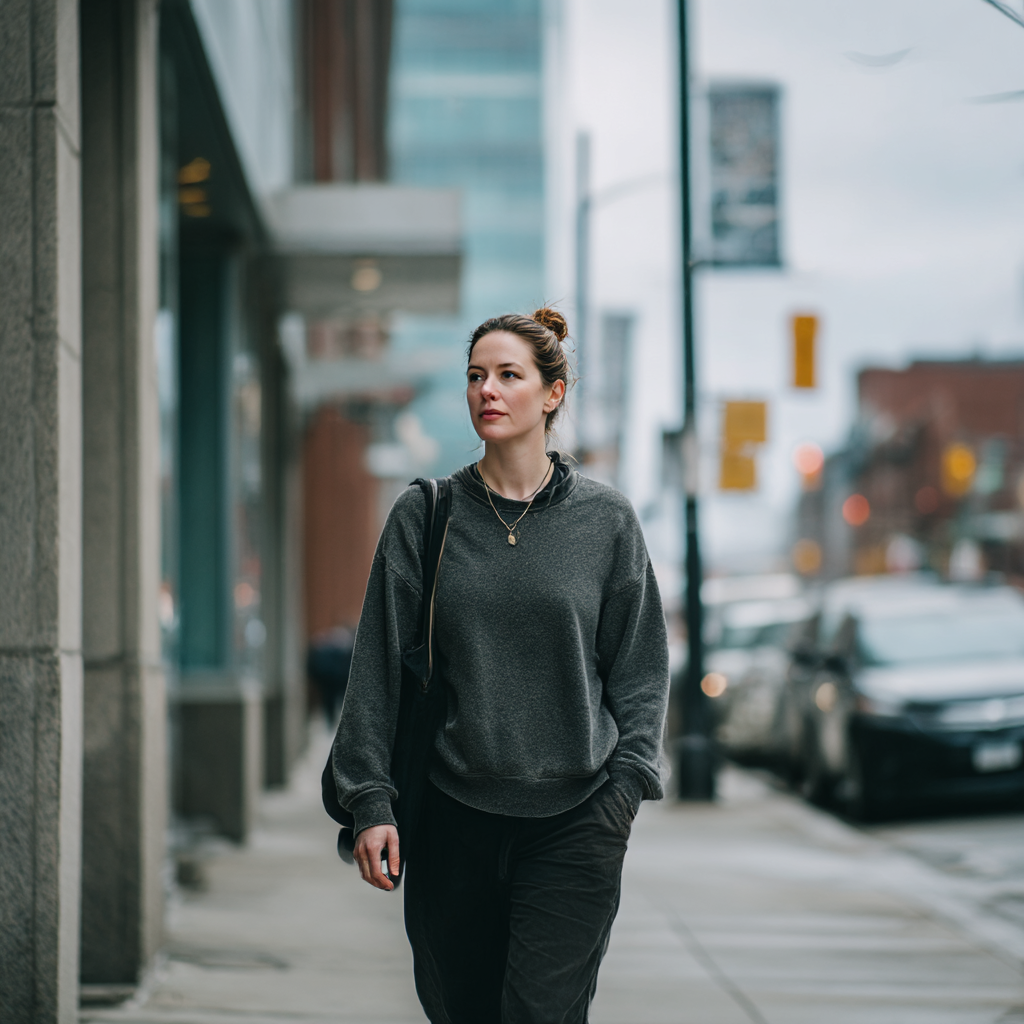
Novelty, Movement Variety, and Why the Body Needs More Than Repetition
One of the biggest misconceptions in fitness is that repetition equals mastery.
Repetition builds efficiency. Variety builds resilience.
From a neuroplasticity perspective, the brain maintains adaptability through exposure to varied input. Different speeds. Different directions. Different challenges. When movement becomes too uniform, the nervous system stops updating its map of the body in space.
This is why people who “work out” can still feel unstable in daily life. They’ve trained performance, not responsiveness.
Balance improves when the body is allowed to explore again. When it’s exposed to small, manageable challenges that invite adjustment rather than force control.
This is not about doing more. It’s about doing differently.
Why I Approach Balance as a Whole-Life Signal
I don’t treat balance as an isolated skill. I treat it as feedback.
Balance reflects how safe, adaptable, and supported the nervous system feels. When it declines, I don’t ask, “What exercise fixes this?” I ask, “What has narrowed?”
The Balance Program is built around restoring adaptability, not chasing stability. Stability without adaptability is just rigidity.
In practice, this means:
working with breath and pacing before adding challenge
rebuilding trust in small movements
reintroducing variation in a controlled way
addressing fear and hesitation as physical experiences, not mental flaws
allowing choice, not forcing compliance
My background allows me to see balance not as a strength test, but as a nervous system skill. When we restore responsiveness, confidence follows naturally.
The books that helped me make sense of what I was already seeing
I don’t recommend books lightly. Most of what I do comes from years of watching bodies respond, hesitate, adapt, or shut down. But there were moments, reading certain books, when things I had felt intuitively finally had language.
When I read Why Zebras Don’t Get Ulcers, what stayed with me wasn’t the science alone. It was the clarity. The way Sapolsky describes stress as something that doesn’t just pass through the system, but reorganizes it. I remember thinking, this explains so many people who look fine and feel anything but. It gave me a framework for understanding why capable, intelligent adults can feel physically fragile without being weak or ill.
The Body Keeps the Score landed differently. It wasn’t a revelation so much as a confirmation. I could recognize the patterns immediately. The way the body holds on. The way it anticipates. The way people don’t always trust their own movements, even when nothing is technically “wrong.” Reading it made me more patient, both with clients and with the process. It reminded me that bodies don’t forget quickly, and they shouldn’t be forced to.
And Range was surprisingly grounding. It helped me articulate why repetition alone never seemed enough. Why people who moved beautifully in one context could still struggle elsewhere. The idea that adaptability comes from variety resonated deeply with how I already worked. It validated the instinct to widen experience instead of narrowing it further.
None of these books changed my work overnight. But they sharpened my understanding. They helped me trust that balance loss is rarely a simple mechanical problem. It’s almost always contextual.
What balance work actually looks like in my practice
I don’t think of balance as something you “train” and move on from. I think of it as something that reflects how much room a person has, internally and externally.
When someone comes to me feeling unsteady, I’m listening for more than posture or alignment. I’m watching how they enter the room. How quickly they move. Whether they rush through transitions. Whether they hold their breath when things get slightly unpredictable.
My work is less about correcting and more about restoring permission. Permission to respond instead of brace. Permission to move without anticipating failure. Permission to trust small adjustments again.
That’s why I don’t rush balance challenges. And I don’t isolate them. Balance returns when the system feels supported enough to explore, not when it’s pushed into compliance.
If any of this sounds familiar
If you’re reading this and recognizing yourself, I want to be clear about something. Feeling less steady doesn’t mean you’re fragile. It means your system has adapted to a narrower world.
That can happen because of stress. Or routine. Or responsibility. Or simply too much time spent holding things together.
What I see, again and again, is that when people are given space to reintroduce variation, curiosity, and choice into movement, stability follows naturally. Not as control, but as confidence.
Balance doesn’t return by tightening life further.
It returns when the body is allowed to respond again.
And that’s the work I care about. Because when balance comes back, it’s not just the body that changes. People stand differently in their lives, too.
Useful links
📘 Sapolsky, Robert M. — Why Zebras Don’t Get Ulcers
Chicago (Author-Date):
Sapolsky, Robert M. 2004. Why Zebras Don’t Get Ulcers: The Acclaimed Guide to Stress, Stress-Related Diseases, and Coping. 3rd ed. New York: Henry Holt and Company.
Official links:
• Amazon: https://www.amazon.com/Why-Zebras-Dont-Ulcers-Third/dp/0805073698
• Goodreads: https://www.goodreads.com/book/show/133904
📗 Epstein, David — Range: Why Generalists Triumph in a Specialized World
Chicago (Author-Date):
Epstein, David. 2019. Range: Why Generalists Triumph in a Specialized World. New York: Riverhead Books.
Official links:
• Amazon: https://www.amazon.com/Range-Generalists-Triumph-Specialized-World/dp/0735214484
• Goodreads: https://www.goodreads.com/book/show/39778145
📙 van der Kolk, Bessel A. — The Body Keeps the Score: Brain, Mind, and Body in the Healing of Trauma
Chicago (Author-Date):
van der Kolk, Bessel A. 2015. The Body Keeps the Score: Brain, Mind, and Body in the Healing of Trauma. New York: Viking.
Official links:
• Amazon: https://www.amazon.com/Body-Keeps-Score-Healing-Trauma/dp/0670785938
• Goodreads: https://www.goodreads.com/book/show/18693771