
Balance Loss After Injury, Illness, or Burnout
The Phase No One Talks About
One of the most common sentences I hear sounds like this:
“I’m fine. I’ve recovered. But something still feels off.”
It comes from people who have done everything “right.” They followed medical advice. They rested. They went back to work. They returned to exercise. On paper, recovery is complete.
And yet, their body tells a different story.
They hesitate when stepping off a curb.
They feel unsure on stairs.
They brace before simple movements.
They don’t fully trust where their body is in space anymore.
This phase rarely gets talked about, because it doesn’t fit neatly into categories. There’s no dramatic injury anymore. No active illness. No obvious limitation. But balance, confidence, and ease haven’t returned either.

And that gap matters.
What happens after recovery is declared
When someone injures themselves, gets sick, or burns out deeply, the body doesn’t just heal tissue. It learns.
It learns where it felt unsafe.
It learns which movements preceded pain.
It learns when things went wrong.
Even minor injuries can leave a trace. A sprained ankle, a back flare-up, a fall that didn’t seem serious at the time. Long illnesses do the same, especially those that involve fatigue, dizziness, or long periods of immobility. Burnout, too, has a physical footprint. When someone is exhausted for months or years, the nervous system adapts by conserving, guarding, pulling inward.
By the time people arrive at Banyan, they often say things like:
“I’m healed, but I’m careful.”
“I don’t move the same way I used to.”
“I feel disconnected from my body.”
What they’re describing isn’t a lack of strength. It’s a loss of trust.
Protective patterns that stay too long
After injury or illness, protection is appropriate. It’s intelligent. The body limits movement, reduces risk, and prioritizes safety. The problem isn’t that this happens. The problem is when protection never fully lets go.
I see it as:
stiffness that doesn’t resolve with stretching
over-control in simple movements
delayed reactions when balance is challenged
shallow breathing during movement
avoidance of positions that once felt natural
People often blame themselves. They think they’re weak or out of shape. But what I’m watching is a nervous system that hasn’t been invited back into normal variability yet.
Balance depends on small, quick adjustments. If the body is still operating as if danger might return at any moment, those adjustments become restricted. The result is movement that feels cautious, heavy, or uncertain.
Illness, dizziness, and confidence in space
Illness can be particularly disruptive to balance, even when it doesn’t directly involve injury. Long periods of fatigue, inflammation, or dizziness can quietly erode vestibular confidence. People stop trusting their orientation. They move slower. They narrow their base of support without realizing it.
Post-viral recovery, including post-COVID experiences, often includes this phase. The body is no longer acutely sick, but it hasn’t fully recalibrated. Spatial awareness feels dulled. Energy is inconsistent. Balance feels unreliable.
What’s important to understand here is that balance loss in these cases is not a mechanical failure. It’s a system recalibrating after prolonged stress.
And that recalibration needs guidance.
Burnout and dissociation from the body
Burnout is not just emotional exhaustion. It changes how people inhabit their bodies.
When someone has been operating beyond capacity for too long, awareness often narrows. People report feeling disconnected, numb, or strangely cautious. Movements become smaller. Reaction time slows. Balance suffers, not because the body can’t do more, but because it no longer expects support.
This is where dissociation shows up in subtle ways. Not dramatic detachment, but a quiet absence of presence. People move without fully sensing themselves.
Balance work in this context isn’t about challenge. It’s about re-entry.
Why hesitation shows up in movement
One thing I say often is this:
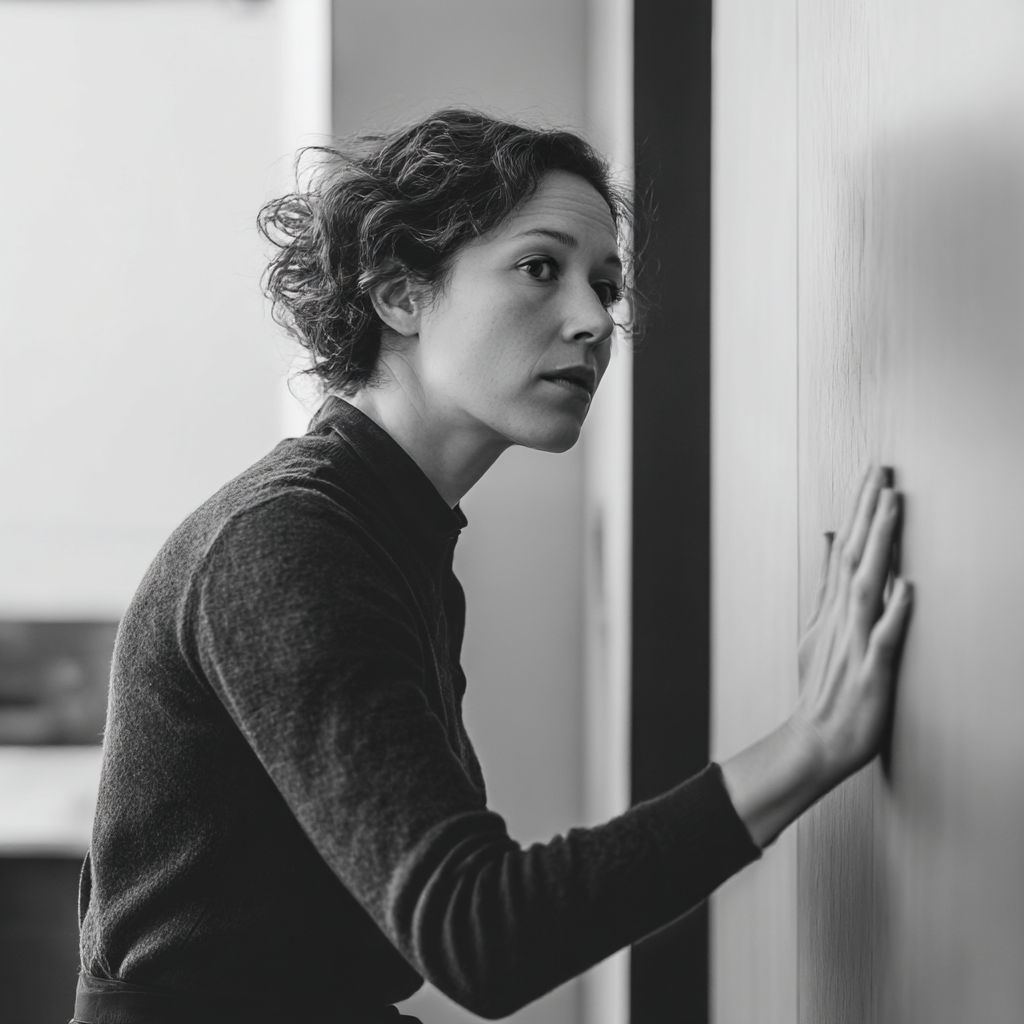
The body remembers what the mind has moved on from.
Fear-avoidance patterns are well documented in pain science. When pain or threat has been present, the body learns to avoid the conditions associated with it. Even after healing, those avoidance patterns can remain.
This shows up as:
hesitation before stepping
over-thinking simple movements
tightening before changing direction
reluctance to load one side of the body
None of this is conscious. And none of it is fixed by forcing confidence.
Balance returns when the body is shown, gradually and repeatedly, that movement is safe again.
How I approach this work
When someone comes to me after injury, illness, or burnout, I don’t assume they need more strength. I assume they need more reassurance from their own body.
The work starts slowly. Often more slowly than people expect.
I pay attention to:
how they breathe when something feels unfamiliar
where they rush
where they hold
where they avoid
We rebuild balance by restoring choice. By introducing variation without overwhelm. By letting the nervous system experience success without pressure.
This is why the Balance Program isn’t about proving anything. It’s about rebuilding trust.
Confidence comes later. First comes safety.
Books that helped me understand this phase
Explain Pain by David Butler and Lorimer Moseley changed how I think about recovery. What stayed with me most was the idea that pain and threat live in interpretation, not just tissue. It helped me understand why people can be physically healed and still move as if they aren’t. The body isn’t broken. It’s cautious.
Waking the Tiger by Peter Levine gave me language for something I was already seeing in practice. The idea that the body completes stress responses slowly, in its own time, resonated deeply. Reading it made me more patient. Less interested in fixing. More interested in allowing.
Neither book offers quick solutions. Both reinforced the same truth: recovery is not an event. It’s a process of reintegration.
If you’re in this in-between phase
If you’re no longer injured or ill, but you don’t feel fully yourself, you’re not imagining it. And you’re not behind.
You’re in a phase that often gets skipped. The phase where trust is rebuilt. Where balance is restored not through force, but through permission.
Balance loss after injury, illness, or burnout doesn’t mean something is wrong with you. It means your system learned to protect you, and it hasn’t yet been shown that it’s safe to let go.
That phase deserves attention. Care. Time.
And when it’s handled well, balance doesn’t just return. It deepens.