
What Lion's Gate Can Teach Us About Mindfulness
Every year on August 8, millions of people around the world observe what has become known as the Lion's Gate Portal. For some, it is a deeply spiritual event associated with intention setting, personal transformation, and new beginnings. Others see it simply as a beautiful tradition, an annual reminder to pause and reflect on the direction their life is taking. Whatever your perspective, I find it fascinating that so many people choose the very same day to slow down, breathe more deeply, write down their hopes, and consciously let go of what no longer serves them. As someone who works with movement, mindfulness, and the nervous system every day, I believe there is something worth paying attention to here. Not because of the date itself, but because of what people choose to do with it. The practices that have become associated with Lion's Gate are, interestingly enough, many of the same practices that science has been encouraging for years.
Mindfulness Begins With Paying Attention
One of the biggest misconceptions about mindfulness is that it requires sitting perfectly still while trying to empty your mind. In reality, mindfulness asks us to do something much simpler, and much more difficult. It asks us to notice. To notice our breathing before it becomes shallow. To notice our shoulders before they creep toward our ears. To notice our thoughts before they become stories that carry us far away from the present moment. Whether someone spends August 8 meditating under the stars or quietly enjoying a cup of tea in the garden, the common thread is attention. They are intentionally stepping out of autopilot.
Our brains spend much of the day operating on habit. We repeat familiar routines, respond automatically to stress, and move through our environment with very little conscious awareness. Choosing a symbolic day to pause interrupts that automatic rhythm. It creates a moment when we deliberately ask ourselves, How am I, really? That single question is often the beginning of mindfulness. Before we change anything in our lives, we first have to notice where we are.
Writing Intentions Changes More Than Your Notebook
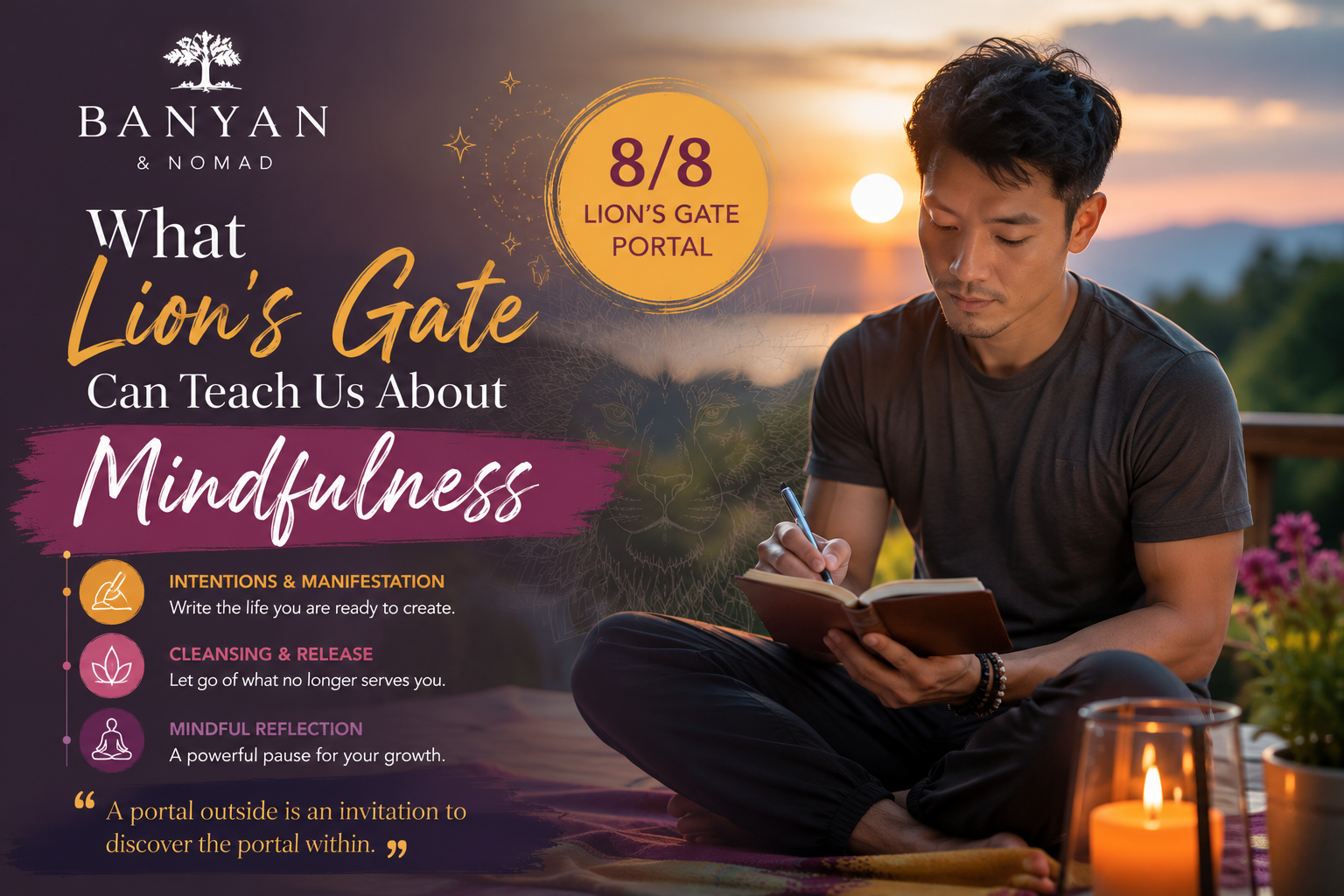
One of the traditions many people associate with Lion's Gate is writing down intentions for the months ahead. Some write about relationships. Others focus on health, work, creativity, or inner peace. Whether or not you believe the date itself carries special significance, there is something remarkably powerful about translating vague hopes into clear words. Psychologists have long known that writing our goals makes them feel more concrete and increases the likelihood that we will act on them. A written intention gives the brain something specific to recognize and pursue.
I often encourage clients to be just as intentional with their bodies as they are with their calendars. Instead of writing, I want to exercise more, try writing, I want to feel steadier when I climb stairs, or I want to breathe more deeply when I'm under pressure. Those intentions are personal, measurable, and meaningful. They shift the focus away from perfection and toward progress. More importantly, they remind us that lasting change usually begins with clarity rather than motivation.
Letting Go Is Also a Physical Practice
When people speak about releasing old habits or emotional blockages, it's easy to imagine that this process happens only in the mind. Yet our bodies tell a different story. We hold tension in our jaws when we're anxious. We tighten our shoulders during stressful conversations. We hold our breath while concentrating. Over time, these patterns become so familiar that we stop noticing them. They become part of the way we move through the world.
Mindfulness invites us to release these habits, not through force, but through awareness. The moment you notice that you're clenching your jaw, you have the opportunity to soften it. The moment you realize you're taking shallow breaths, you can choose a slower inhale. The moment you become aware that you're rushing through your day, you can decide to walk a little more slowly. Sometimes the greatest act of letting go isn't dramatic at all. It's simply allowing the body to stop carrying what it no longer needs.
The Nervous System Loves Meaningful Pauses
One reason I appreciate traditions like Lion's Gate is that they encourage people to stop. Our modern lives rarely do. We move from one deadline to another, from one notification to the next, often without giving ourselves permission to reflect. Yet our nervous system benefits enormously from moments of intentional pause. Research on mindfulness has shown that even brief periods of focused breathing and present-moment awareness can reduce stress, improve emotional regulation, and increase our ability to respond thoughtfully instead of reacting automatically.
I don't believe we need to wait for a special date to experience these benefits. But I do believe that meaningful dates can serve as powerful reminders. They interrupt routine and invite us to reconnect with ourselves. In that sense, Lion's Gate functions much like a birthday, a new year, or the first day of spring. It becomes a landmark in time that encourages us to ask whether the way we're living still reflects the way we'd like to feel.
A Portal Into Yourself
Perhaps the most valuable lesson Lion's Gate offers has nothing to do with the stars and everything to do with ourselves. Whether you see the day as spiritual, symbolic, or simply inspiring, it encourages something we often neglect: self-observation. It reminds us to become curious rather than critical. To ask what we want more of, what we're ready to release, and how we can move through the rest of the year with greater intention.
As a Pilates and mindfulness teacher, I've learned that transformation rarely arrives in one extraordinary moment. It grows through small decisions repeated consistently. One mindful breath. One healthier movement. One honest reflection. One intentional choice at a time. If August 8 inspires you to make even one of those choices, then perhaps it has already served a meaningful purpose.
Here's My Final Tip
If you're marking Lion's Gate this year, don't worry about finding the perfect ritual.
Instead, find ten quiet minutes.
Take a slow breath.
Write down one habit you'd like to leave behind, one quality you'd like to strengthen, and one small action you can take tomorrow that reflects the person you hope to become.
Mindfulness isn't about waiting for life to change around us.
It's about becoming fully present for the life we're already living.
Mantra: Every meaningful change begins with one moment of wholehearted attention.
With mindfulness,
Elena