
By Elena-Rozmina Marian, OTR/L, Certified Pilates Instructor and Founder of Banyan & Nomad
There are moments in everyday life when we become unexpectedly aware of our balance. Perhaps you find yourself reaching for the handrail on a staircase you have climbed hundreds of times. Maybe walking across an uneven lawn requires more concentration than it once did, or you notice that putting on your trousers while standing has become a little less effortless. These changes can be subtle, and they don't necessarily mean something is wrong. But they often make us wonder whether there is something we can do to feel more confident in our movements.
The encouraging answer is that balance is not simply something we have or lose. It is a complex ability involving our muscles, joints, nervous system, vision, and brain. Many of the skills that contribute to balance can be trained and improved, even as we grow older.
As an occupational therapist and Pilates instructor, I have spent years exploring how movement influences the way we live. I've come to appreciate that the most meaningful improvements aren't always the ones we notice during an exercise session. Sometimes, they're the moments when an everyday activity feels more comfortable, when we move without unnecessary hesitation, or when we discover that our bodies are capable of more than we expected.
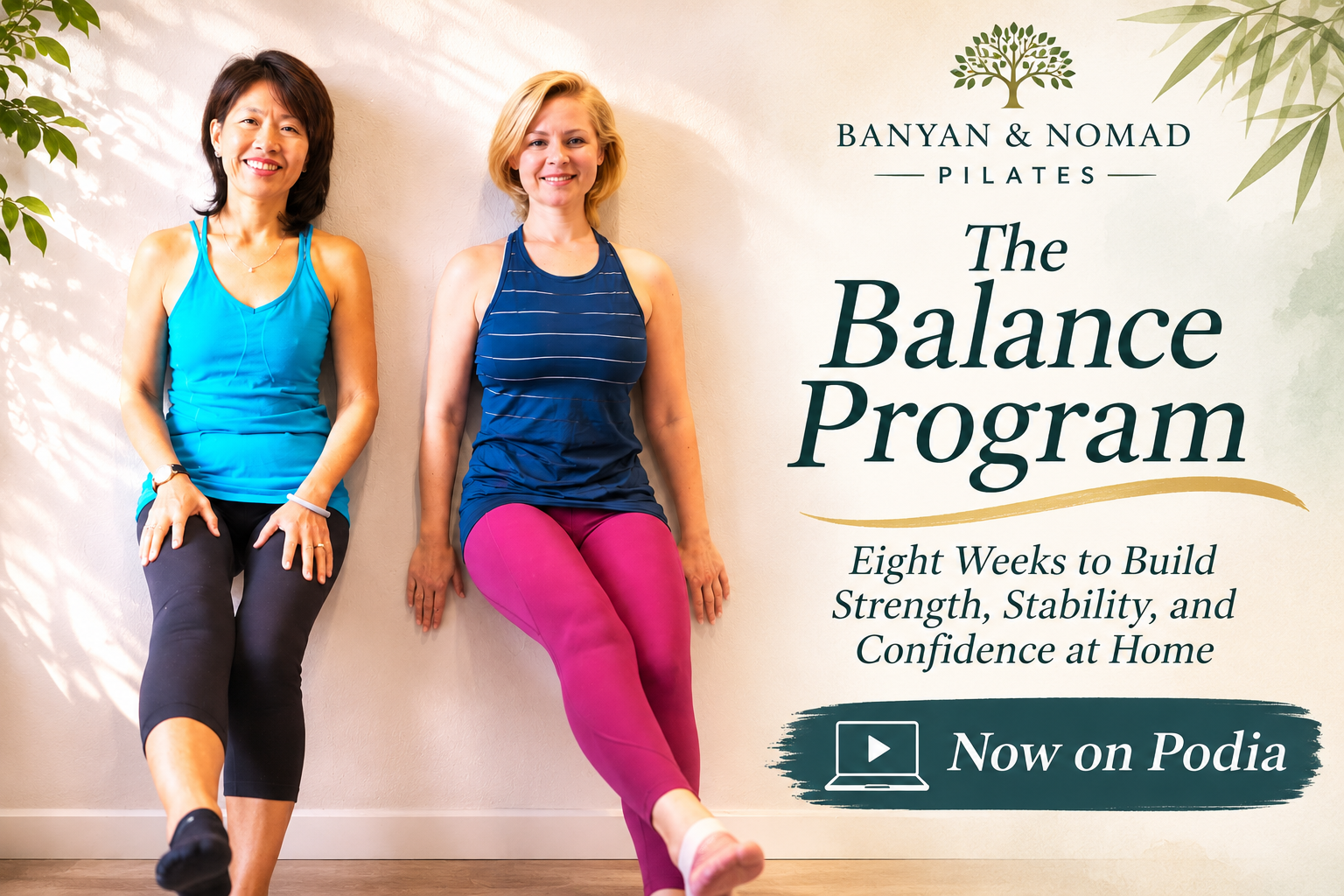
This philosophy inspired me to create The Balance Program, a structured eight-week online course available through Banyan & Nomad on Podia. My goal is to help you develop greater strength, stability, coordination, and confidence through thoughtful, progressive movement that fits into your life.
Why Did I Create The Balance Program?
Throughout my work in occupational therapy and Pilates, I've been interested in the relationship between physical ability and independence. Occupational therapy looks beyond individual movements to consider how we participate in everyday activities, whether that means preparing a meal, enjoying a walk, getting dressed, traveling, or spending time with the people we love.
Balance plays an important role in nearly all these experiences. Yet it is often something we begin thinking about only after an unsettling moment: a stumble, an unexpected loss of footing, or the realization that an activity we once performed automatically now requires more attention.
I wanted to create a program that approaches balance before it becomes a source of constant worry, while also welcoming people who have already noticed changes in their steadiness.
My training in classical Pilates has shown me how valuable controlled, intentional movement can be. Pilates encourages us to understand how different parts of the body work together, how to coordinate breathing with movement, and how to develop strength without sacrificing awareness or control.
Occupational therapy adds another essential perspective: movement should have a meaningful purpose beyond the exercise itself.
The Balance Program brings these ideas together. Rather than concentrating exclusively on standing on one leg or holding a difficult position, we explore the different physical and sensory abilities that support balance in everyday life.
I also wanted to make this work accessible to people who may not be able to attend regular studio sessions. By offering the program online, participants can learn from home, revisit lessons, and build a consistent practice around their own schedules.
What Is The Balance Program?
The Balance Program is an eight-week online movement course designed to help adults develop the strength, stability, coordination, and body awareness that contribute to better balance.
It combines Pilates-based exercises, functional movement, proprioceptive training, mindful attention, and restorative practices in a progressive learning experience.
Each week introduces a different aspect of movement, allowing you to explore how your body responds and gradually build on what you've learned.
The course includes two guided exercise sessions per week, with sessions of approximately 40 and 30 minutes. Alongside the movement practice, you'll find explanations and opportunities for reflection that encourage you to understand what you're doing and why it matters.
You can follow the lessons from home and return to them as needed. Although the course is organized over eight weeks, there is no need to rush through the material. Developing confidence in movement takes practice, and everyone progresses differently.
What Will You Learn During the Eight Weeks?
The course is designed as a progressive journey rather than a collection of unrelated workouts. Each stage develops skills that support the next, gradually bringing together strength, stability, coordination, and more complex movement.
Building a Foundation
We begin by exploring body awareness, posture, controlled movement, and the foundations of stability. These early exercises help you recognize how you distribute your weight, organize your body, and respond to changes in position.
This is also an opportunity to become more familiar with your current abilities without judgment. The purpose is not to measure yourself against someone else's performance but to develop a useful starting point for your own practice.
Developing Strength and Stability
As the program progresses, we introduce exercises that challenge the muscles supporting everyday movement, particularly those involved in standing, walking, transferring weight, and maintaining an upright posture.
Strength is essential for balance because our muscles must be able to respond when our center of gravity shifts. For example, stepping onto a curb requires coordinated work from the hips, knees, ankles, and trunk. Training these areas can support more controlled movement.
Improving Coordination and Body Awareness
Balance depends on more than muscular strength. Our nervous system continuously receives information about where our body is positioned and how it is moving.
This awareness, known as proprioception, helps us adjust our movements without constantly looking at our feet or thinking about every joint.
Through carefully selected exercises, we explore weight shifting, coordination, changes in direction, and the relationship between movement and sensory information.
Bringing Balance into Everyday Movement
Later in the program, we begin integrating the skills we've practiced. Everyday life rarely asks us to balance while remaining perfectly still. More often, we need to turn, reach, walk, change direction, or respond to something unexpected.
The goal is to become more comfortable coordinating different movements while maintaining awareness and control.
Moving Forward with Confidence
The final stage brings together the lessons from the preceding weeks and encourages you to consider how you can continue practicing beyond the course.
Balance training is most valuable when it becomes part of an ongoing approach to physical well-being. My hope is that you'll finish with a better understanding of your body, a useful collection of exercises, and greater confidence in your ability to keep learning.
What Are the Benefits of Balance Training?
Balance training can offer several meaningful benefits, particularly when it is combined with strength, mobility, and coordination exercises.
Research suggests that appropriately designed exercise programs can improve balance and physical function in older adults. Programs that include balance and functional exercises have also been shown to reduce falls among community-dwelling older adults, although individual results depend on factors such as health, consistency, and the type of training.
Here are some of the areas we focus on in The Balance Program.
Greater stability during everyday activities. Practicing controlled weight shifts, transitions, and standing movements can help develop the physical skills needed for activities such as climbing stairs, reaching for objects, and walking across different surfaces.
Improved functional strength. Stronger muscles help support posture, movement, and the adjustments we make to remain steady. Our exercises emphasize strength that serves practical activities rather than strength as an isolated goal.
Better coordination and body awareness. Learning how your body moves through space can help you recognize movement patterns and develop more deliberate, efficient responses.
More confidence in movement. Feeling uncertain about balance can sometimes lead people to avoid activities they previously enjoyed. A gradual, supportive exercise practice may help rebuild confidence by providing opportunities to experience movement in a controlled environment.
A more mindful relationship with your body. By paying attention to breathing, alignment, sensation, and movement quality, you can develop greater awareness of how your body responds to different challenges.
These benefits are not guaranteed outcomes, and progress will vary from person to person. What matters is creating a consistent, appropriate practice that supports your individual abilities and goals.
Who Is The Balance Program Designed For?
I created this course particularly with adults over 50 in mind, although the principles of balance, coordination, and mindful movement are relevant throughout adulthood.
You may find the program helpful if you've noticed that certain everyday activities require more concentration than they used to, or if you simply want to be proactive about maintaining your strength and mobility.
It may also appeal to people who enjoy Pilates but would like to understand how its principles relate specifically to balance and functional movement.
You don't need to be an advanced Pilates practitioner to appreciate the program. However, you should be comfortable participating in gentle physical activity and able to follow exercise instructions safely.
Because this is a prerecorded online course rather than individualized clinical treatment, it cannot assess your personal medical needs or provide hands-on assistance. If you have experienced recent falls, significant dizziness, an injury, or a condition affecting your balance, I recommend consulting your healthcare professional before beginning. Some individuals may benefit more from an in-person assessment or supervised exercise program.
What Makes My Approach Different?
One of the most important lessons I've learned as an occupational therapist is that movement cannot be separated from the person performing it.
Two people may complete the same exercise for entirely different reasons. One might want to feel steadier while gardening. Another may be preparing for a walking holiday. Someone else may simply want to move around the house without constantly questioning their balance.
The exercises may look similar, but the meaning behind them is personal.
This is why I encourage participants to consider how their practice connects with their everyday lives.
I also believe that effective movement education requires both challenge and patience. We need opportunities to develop new abilities, but we also need to recognize when a movement is too demanding or when our bodies require a different approach.
Pilates provides a wonderful framework for exploring precision, control, and coordination. Occupational therapy reminds us to keep those skills connected to meaningful daily activities. Mindfulness helps us pay attention to the experience of moving rather than concentrating exclusively on the outcome.
Together, these perspectives form the foundation of The Balance Program.
How Does The Balance Program Work on Podia?
I've made The Balance Program available through Podia, an online learning platform where you can purchase the course and follow the lessons from your computer, tablet, or smartphone.
You don't need to attend live classes at a particular time or travel to a studio. The course materials are available online, allowing you to organize your practice around your own schedule.
How to Purchase The Balance Program
Getting started is straightforward:
Visit The Balance Program course page. Follow the course link from Banyan & Nomad to the program's dedicated page on Podia. You'll find an overview of the course and the purchase option.
Choose to enroll. Select the purchase button and proceed to checkout, where you'll see the current course price.
Apply a discount if available. When a promotional discount code is offered, enter it in the appropriate checkout field before completing your purchase. Some offers may be applied automatically, depending on the promotion.
Complete your purchase. Follow the checkout instructions and provide the information needed to create or access your student account.
Access your course. Once your purchase is complete, sign in to Podia using the email address associated with your enrollment. Your purchased course should appear in your student library.
Begin your first week. Open The Balance Program and start with the introductory materials before moving into your guided exercise sessions.
You can revisit the course materials as permitted by your enrollment, so there is no need to remember everything after watching a lesson once.
Explore The Balance Program on Podia
How Should You Prepare for Your First Session?
You don't need an elaborate home gym to begin exploring mindful movement, but a little preparation can make your experience more comfortable.
Choose a space with enough room to move without encountering furniture, loose rugs, or other obstacles. Good lighting is particularly important when practicing balance.
Keep a sturdy chair or stable support nearby whenever an exercise calls for one, and wear comfortable clothing that allows you to move freely. Follow the equipment recommendations provided in the individual lessons.
I also encourage you to approach your first session with curiosity rather than expectations. You don't need to perform every movement perfectly. Pay attention to the instructions, choose appropriate options, and allow yourself time to become familiar with the exercises.
If you experience pain, dizziness, or unusual discomfort, stop the activity and seek appropriate professional guidance.
How Often Should You Practice Balance Exercises?
Consistency is generally more useful than occasional bursts of intense exercise.
The Balance Program provides two guided exercise sessions each week, giving you a structured starting point for developing a regular practice.
Depending on your abilities, your healthcare professional's recommendations, and the activities you already enjoy, you may also benefit from incorporating suitable balance and strength exercises into your broader weekly routine.
Public health guidelines recommend that older adults include multicomponent physical activity emphasizing functional balance and strength on three or more days per week. The program's two weekly sessions can form part of that broader approach, but they are not intended to replace every other form of physical activity.
Remember that rest, recovery, and appropriate progression are part of a successful exercise routine.
Is It Ever Too Late to Work on Your Balance?
One of the most encouraging things about studying human movement is recognizing our capacity to adapt.
Although aging can affect muscle strength, sensory processing, and other abilities involved in balance, research shows that older adults can still respond positively to appropriately designed exercise programs.
That doesn't mean every person will progress at the same rate or achieve the same results. Health conditions, previous activity levels, and individual circumstances all influence the experience.
But age alone is not a reason to stop learning new movement skills.
I often return to a favorite quote from long-distance swimmer Diana Nyad: “Find a way.”
To me, those words capture something essential about movement education. Finding a way doesn't always mean pushing harder. Sometimes it means changing an exercise, slowing down, asking for guidance, or approaching a familiar activity from a new perspective.
The important thing is to remain curious about what is possible.
Ready to Begin Your Balance Journey?
I created The Balance Program because I believe that moving with greater confidence can make a meaningful difference in how we experience everyday life.
Whether your goal is to feel steadier on the stairs, improve your coordination, maintain your independence, or simply become more comfortable and confident in your body, I hope this program offers a thoughtful place to begin.
Over eight weeks, we'll explore the relationship between strength, stability, coordination, and mindful movement. You'll have opportunities to practice, reflect, and gradually build skills that support the activities that matter to you.
The course is available online through Podia, so you can learn from home and move through the lessons at a pace that respects your individual needs.
I'd love to welcome you to The Balance Program.
Discover The Balance Program and Enroll on Podia
With mindfulness,
Elena
Research and Further Reading
The following resources provide additional information about balance training, physical activity, fall prevention, and exercise in older adulthood.
World Health Organization. WHO Guidelines on Physical Activity and Sedentary Behaviour (2020). Recommendations for physical activity, strength training, and functional balance exercises in older adults.
https://www.who.int/publications/i/item/9789240015128Sherrington, C., et al. Exercise for Preventing Falls in Older People Living in the Community. Cochrane Database of Systematic Reviews (2019). A systematic review examining the effects of exercise interventions on fall rates.
https://doi.org/10.1002/14651858.CD012424.pub2National Institute on Aging. Four Types of Exercise Can Improve Your Health and Physical Ability. Information about endurance, strength, balance, and flexibility exercises for older adults.
https://www.nia.nih.gov/health/exercise-and-physical-activity/four-types-exercise-can-improve-your-health-and-physical-abilityCenters for Disease Control and Prevention. Older Adult Activity: An Overview. Guidance on physical activity, muscle strengthening, and balance activities for adults aged 65 and older.
https://www.cdc.gov/physical-activity-basics/guidelines/older-adults.htmlAmerican College of Sports Medicine. Exercise and Physical Activity for Older Adults. Position stand discussing exercise, functional capacity, and healthy aging.
https://doi.org/10.1249/MSS.0b013e3181a0c95c