
From Mat to Moment: Using Pilates Principles Off the Pilates Mat
Control, breath, focus, and flow in work, parenting, and real stress moments
One of the quiet frustrations I hear from people who practice Pilates regularly goes something like this:
“I feel great in class. Then life happens… and it all disappears.”
The strength, the calm, the sense of organization in the body seems to stay neatly folded on the mat while emails pile up, kids melt down, deadlines loom, and the nervous system quietly slides back into old patterns.
But Pilates was never meant to live only in the studio.
Joseph Pilates called his method Contrology for a reason. It wasn’t about perfect choreography or impressive shapes. It was about how the body organizes itself under load. And “load” doesn’t just mean springs, weights, or gravity. Load is also mental pressure, emotional stress, time constraints, responsibility, and fatigue.
When Pilates is understood deeply, it becomes transferable. The mat becomes training. Life becomes the application.
This article is about how to carry Pilates principles into the moments that actually test us: work stress, parenting chaos, emotional overload, and everyday transitions where we usually abandon our bodies without realizing it.
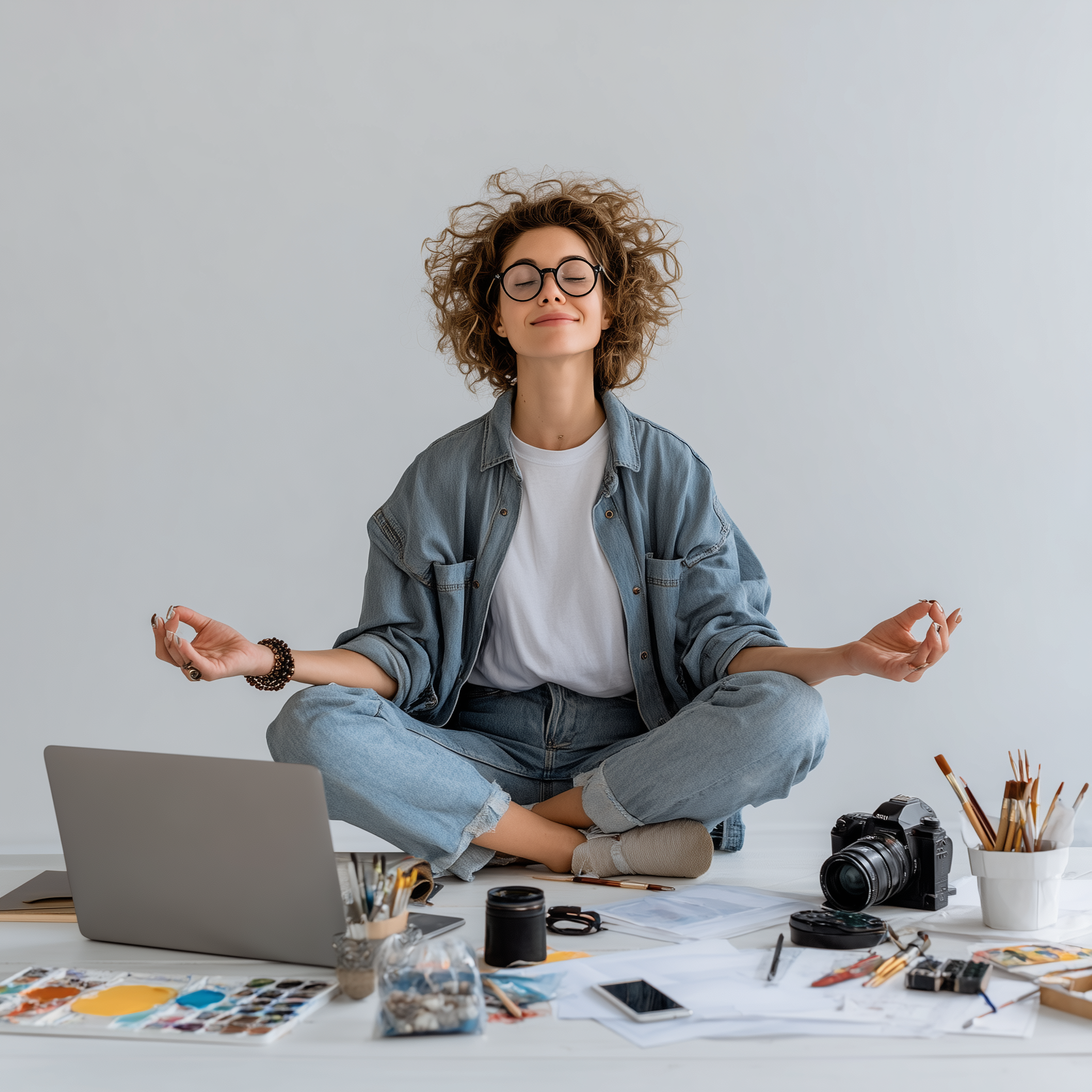
Why Pilates principles matter outside the studio
Pilates trains the nervous system as much as the muscles. It teaches the body how to:
organize effort
regulate breath
distribute tension efficiently
stay present without bracing or collapsing
These skills don’t disappear when class ends. They simply need to be recognized and practiced consciously in other contexts.
Research on motor learning and movement transfer suggests that skills learned in structured environments are more likely to carry over when attention is placed on principles, not just specific exercises. In other words, if you understand why something works, not just how to perform it, your nervous system can apply it elsewhere.
Pilates principles are portable because they’re not movements. They’re strategies.
Let’s unpack the four that matter most off the mat: control, breath, focus, and flow.
Control: responding instead of bracing
In Pilates, control doesn’t mean rigidity. It means intentional organization. Muscles turn on when needed and soften when they’re no longer useful. There’s no excess gripping. No unnecessary effort.
Off the mat, control shows up in moments of pressure.
At work, control might look like noticing when your shoulders creep up as deadlines approach. Instead of pushing harder, you pause, reorganize your posture, and choose a response rather than reacting impulsively.
In parenting, control isn’t about suppressing emotion. It’s about recognizing the moment before you snap. That tiny pause where you exhale, soften your jaw, and speak from regulation instead of overload.
Under stress, many bodies default to bracing. Jaw clenched. Breath held. Pelvis tucked. Shoulders lifted. Control teaches us that more tension is not more effectiveness.
Pilates trains the ability to stay organized without becoming rigid. That’s emotional intelligence expressed physically.
Try this in daily life:
When you feel pressure rising, check three things: jaw, shoulders, breath. If all three are locked, you’re not in control. You’re bracing. Soften them slightly before you act.
Breath: regulating the nervous system in real time

Breath in Pilates is not decorative. It’s functional. It organizes movement, supports the spine, and communicates safety to the nervous system.
Outside the studio, breath becomes one of the fastest ways to influence how stress is processed.
Under pressure, most people unconsciously hold their breath or switch to shallow chest breathing. This shifts the nervous system toward a threat response. Decision-making narrows. Patience drops. Pain sensitivity increases.
Pilates breath emphasizes longer, controlled exhalation and lateral rib expansion. This pattern supports trunk stability while also signaling downregulation to the nervous system.
In work situations, breath can create space before responding to a difficult email or conversation. In parenting, it can help you stay present during emotional intensity rather than escalating alongside it. In moments of overwhelm, breath keeps you in the body instead of disappearing into your head.
This isn’t about breathing perfectly. It’s about remembering to breathe intentionally when it matters.
Try this in daily life:
Before responding to something stressful, exhale slowly through the mouth as if fogging a mirror. Then inhale through the nose, feeling the ribs expand. One cycle is enough to change tone.
Focus: directing attention instead of scattering it
Pilates demands focus. Not because it’s complicated, but because it’s precise. When attention drifts, alignment slips. When alignment slips, the body compensates.
The same thing happens mentally.
At work, multitasking often feels productive but leaves the nervous system fragmented. Attention jumps between tasks, the body tightens, and fatigue sets in faster. Focus isn’t about doing more. It’s about doing one thing with presence.
In parenting, divided attention can feel like disconnection. Children often respond not to words, but to whether your attention is actually with them.
Pilates trains the ability to hold a single anchor: breath, alignment, pathway of movement. That skill translates directly to life when you choose one focal point instead of mentally time-traveling.
Focus is a stabilizing force. It reduces mental noise and physical tension simultaneously.

Try this in daily life:
Choose one anchor during routine tasks. While typing, feel your sit bones. While listening, feel your feet on the floor. While walking, feel the rhythm of your steps. One anchor is enough.
Flow: moving through life without collapse or force
Flow in Pilates isn’t speed. It’s continuity. Movements connect. Transitions matter as much as shapes. There’s a sense of rhythm rather than interruption.
In daily life, many people move between tasks abruptly. We jump from meeting to meeting, role to role, without any transition. The nervous system never lands. It stays slightly braced all day.
Flow teaches us to transition with awareness.
At work, flow might look like taking 30 seconds between tasks to reset posture and breath. In parenting, it might mean pausing before switching from “work mode” to “home mode.” In stressful days, it might simply mean acknowledging that one moment has ended before rushing into the next.
Without flow, we accumulate tension. With flow, we release it incrementally.
Pilates doesn’t teach you to rush. It teaches you to connect.

Try this in daily life:
Before changing activities, stand still for one breath. Feel your weight. Then move. That’s flow training.
Putting it all together: Pilates as a life skill
When control, breath, focus, and flow work together, something subtle but powerful happens. The body becomes a place you can return to under pressure instead of something you abandon.
You stop saving regulation for class.
You stop outsourcing calm to perfect conditions.
You start carrying skill with you.
This is why people who practice Pilates thoughtfully often report benefits beyond strength or flexibility. They feel more grounded. More capable. Less reactive.
Not because life gets easier. But because their response becomes more organized.

A simple “off-the-mat” practice you can use today
Choose one moment you repeat daily.
Just one.
Sitting down at your desk
Opening your front door
Turning off the lights at night
In that moment, apply all four principles:
organize your posture (control)
take one intentional breath
choose one point of focus
move into the next moment smoothly
That’s Pilates.
No mat required.
Pilates doesn’t end when class ends. It becomes most valuable when it meets real life. The messy moments. The stressful conversations. The days when your nervous system is already tired before noon.
The mat is where you practice.
Life is where you apply.
And when Pilates becomes a way of moving through moments instead of just movements, it stops being exercise and starts becoming support.