
Why Your Feet Matter More for Balance Than Your Core
I Rarely Start Where People Expect
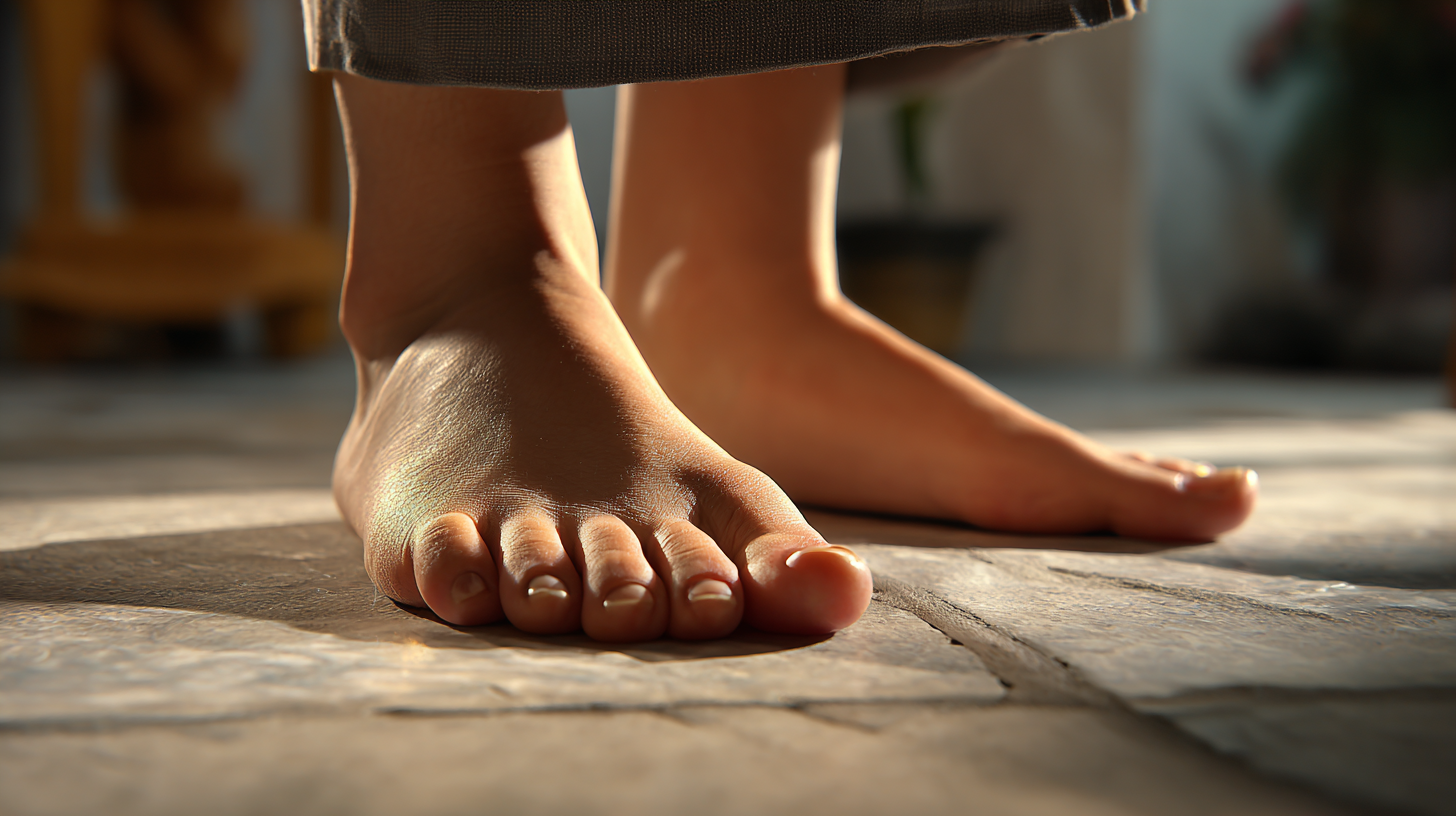
When someone comes to me wanting to improve their balance, they almost always brace their center first. They tighten their abdominals, lift their chest, try to “hold themselves together.” It looks controlled, sometimes even strong. But underneath that effort, something is missing.
I don’t start there. I look at their feet.
Because before your core can organize anything, your body needs to know where it is in relation to the ground. And that conversation begins at the feet, not at the center.
The First Point of Contact
Your feet are the only part of your body that are constantly negotiating with the ground. Every step, every shift, every small adjustment begins there. They are not just structures that support weight. They are sensory organs, constantly receiving information about pressure, texture, direction, and change.
If that input is unclear or limited, everything built on top of it becomes less precise.
I often see clients trying to stabilize from the top down, while the foundation underneath them is not fully participating. The body is trying to organize itself without clear information. And that always requires more effort.
When the Feet Stop Participating
What I see very often is not weakness in the feet, but disconnection.
People stand, but they don’t feel where they are standing. Weight is shifted forward or back without awareness. Toes grip or lift without intention. The arch either collapses or holds rigidly. The foot becomes either passive or overly tense, but rarely responsive.
And when that happens, the rest of the body adapts.
The knees may lock or rotate. The hips begin to compensate. The spine adjusts to keep you upright. The core tightens to create a sense of stability that is no longer coming from below.
Why the Core Ends Up Overworking
The core is often asked to do more than it should because it is trying to compensate for a lack of clarity from the ground.
When the feet are not giving accurate feedback, the body has to create stability somewhere else. So it tightens. It holds. It limits movement in order to feel secure.
But this type of stability is rigid. It does not adapt well. It works until something changes, and then it struggles.
This is why someone can have a very strong core and still feel unstable. Strength alone does not replace information.
What Changes When the Feet Reconnect
When the feet begin to participate again, the shift is immediate, even if it is subtle.
I don’t ask for dramatic changes. I ask for awareness. Where is the weight? Can it move? Can the foot respond without gripping or collapsing? Can it sense the ground instead of just pressing into it?
As that awareness develops, the body begins to reorganize itself. The knees soften. The hips respond more naturally. The spine adjusts with less effort. And the core no longer needs to hold everything together.
Support starts to come from below, not just from within.
Balance as a Whole-Body Conversation
Balance is not created in one place. It is a continuous exchange between the ground and the body.
The feet receive information. The rest of the body responds. And then the feet adjust again.
When this loop is clear, movement becomes more fluid. There is less need to control, less need to brace. The body trusts that it can respond.
And that trust does not come from strength alone. It comes from connection.
🌿 Here’s my final tip
The next time you’re standing, before you adjust anything else, bring your attention to your feet.
Notice where your weight rests. Let it shift, just slightly, without forcing it.
You don’t need to hold yourself up.
You need to feel where you are.
Mantra: “I move from the ground up, not from tension.”
With mindfulness,
Elena