
Why Balance Has More to Do With Your Nervous System Than Your Muscles
When people think about balance, they usually picture strength. Strong legs. Strong core. Maybe better coordination. And while strength matters, it’s only part of the story. You can have strong muscles and still feel unsteady. You can train balance exercises and still feel off on certain days, especially when you’re tired, stressed, or overwhelmed.
That’s because balance isn’t just a muscular skill. It’s a nervous system skill.
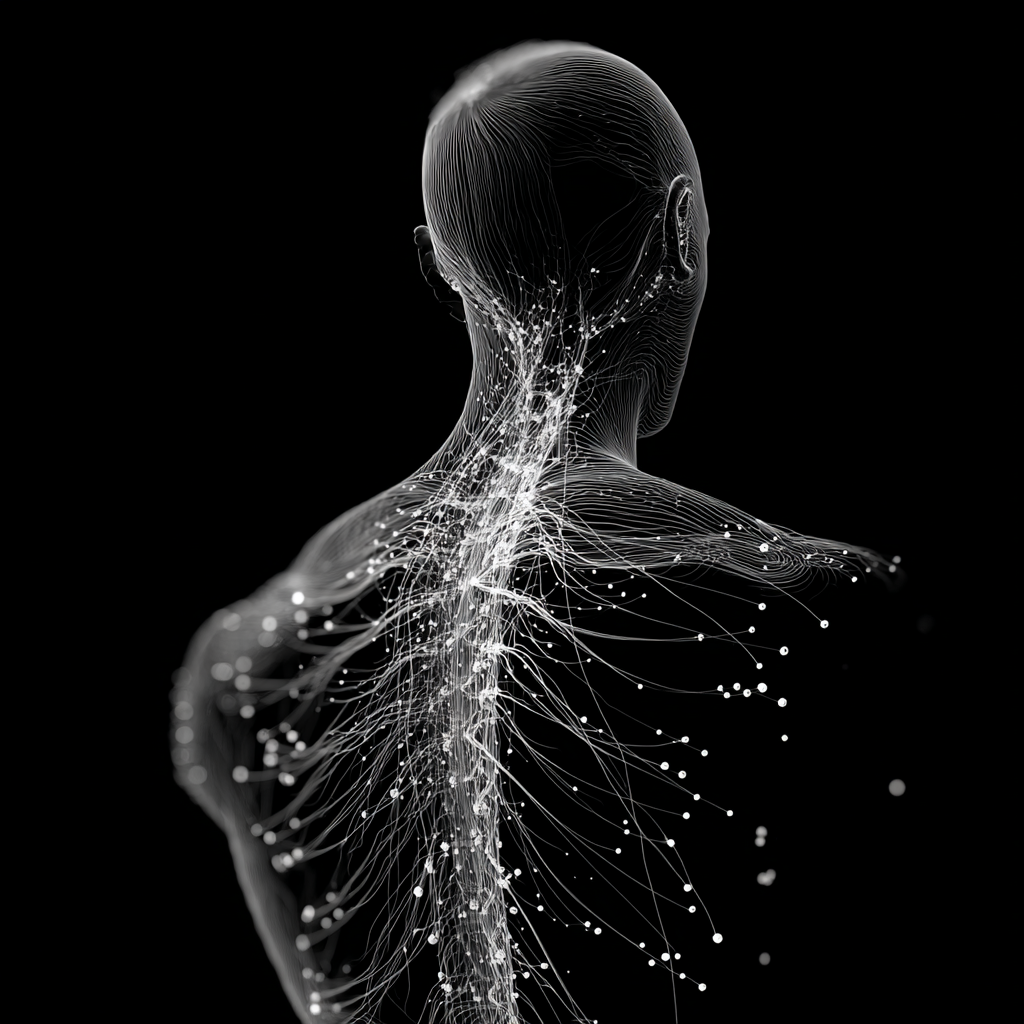
Balance is your body’s ability to constantly sense, interpret, and respond to what’s happening around you. And that process depends far more on how regulated your nervous system is than how strong your muscles are.
Balance is a conversation, not a position
You’re never truly still, even when you’re standing quietly. Your body is making thousands of micro-adjustments every second. Ankles shift. Hips respond. The spine subtly reorganizes. All of this happens automatically, without conscious effort.
Balance is not about holding a pose. It’s about how efficiently your nervous system gathers information and responds to it.
Your brain is constantly integrating signals from three main systems: your vision, your inner ear (vestibular system), and your proprioceptive system, which senses where your body is in space. When these systems communicate smoothly, balance feels effortless. When communication is disrupted, balance feels shaky.
Muscles respond to instructions. The nervous system decides what those instructions are.
Why stress and fatigue affect balance so quickly
Have you ever noticed that your balance feels worse at the end of a long day? Or when you’re anxious, overstimulated, or emotionally drained? That’s not coincidence.
When your nervous system is under stress, its priority shifts from fine motor control to survival. Precision decreases. Reaction time changes. The body becomes more guarded. This can show up as stiffness, delayed responses, or a feeling of being “a step behind” your movements.
Fatigue has a similar effect. When the nervous system is tired, it processes sensory input less efficiently. The result isn’t weakness, but reduced clarity. Balance becomes less reliable, not because your muscles can’t do the job, but because the system guiding them is overloaded.
This is why balance training that ignores regulation often plateaus. The body is doing its best, but the system is overwhelmed.
Breath and posture quietly shape stability
Breath and posture play a surprisingly large role in balance, even though they’re rarely discussed in that context. Shallow breathing can signal urgency to the nervous system, increasing tension and reducing adaptability. Rigid posture can limit the body’s ability to respond fluidly to changes in position.
When breath is free and posture is supported rather than held, the nervous system receives signals of safety. In that state, the body becomes more responsive instead of more guarded.
This is why balance often improves when people stop trying so hard. Ease creates availability. Availability supports responsiveness.
Balance training that includes breath awareness and postural support doesn’t just strengthen the body. It calms the system that coordinates it.
Why balance training needs to feel safe to work
The nervous system learns best when it feels safe. If balance exercises feel threatening, rushed, or overwhelming, the body compensates by stiffening. This may look like control, but it reduces adaptability.
True balance isn’t rigid. It’s responsive.
At Banyan, balance work is approached gradually, with attention to breath, pacing, and nervous system cues. This allows the body to explore instability without panic, and to develop confidence rather than fear.
Over time, this kind of training doesn’t just improve balance during exercises. It improves balance in real life. Walking on uneven ground. Turning quickly. Navigating crowded spaces. Getting up from a chair without hesitation.
These are nervous system skills, not just muscular ones.
Balance is something you build, not something you force
If balance feels inconsistent for you, it doesn’t mean you’re doing something wrong. It means your system may need support before challenge.
Strength matters. Practice matters. But regulation matters first.
When the nervous system feels supported, balance becomes something the body does naturally, not something you have to manage consciously.
That’s when movement feels more confident. More fluid. More trustworthy.
Explore the Balance Program at Banyan
The Balance Program at Banyan is designed to support balance from the inside out, integrating breath, posture, nervous system regulation, and functional movement. It’s not about pushing harder. It’s about building stability that lasts.
If you’re ready to feel steadier, more confident, and more at ease in your movement, this program offers a thoughtful and supportive place to begin.