
The Spine as a Sensory Organ, Not Just a Structure
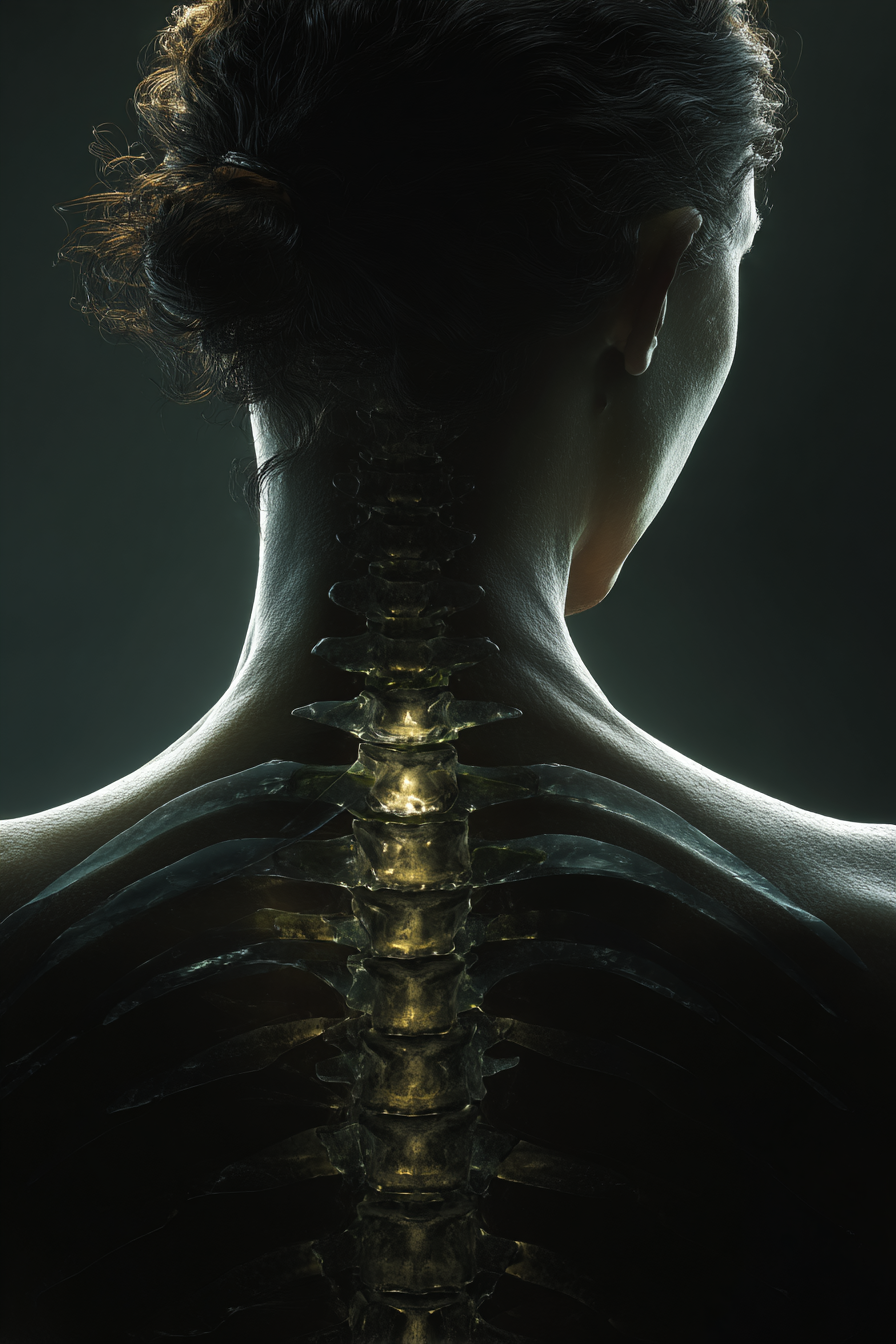
Most people come to me thinking about the spine as something that needs to be fixed, supported, or strengthened, usually because it has started to hurt or feel unreliable in some way. The language around it is almost always mechanical: posture, alignment, support, tension. And while all of that has its place, it only describes a very small part of what the spine actually does. What is often missed is that the spine is not just a structural column holding the body upright, but a highly responsive sensory system that constantly gathers, processes, and distributes information between the brain and the rest of the body.
The Way We Think About the Spine Is Too Limited
Every movement you make, no matter how small, is filtered through the spine. It is the bridge between the central nervous system and the peripheral nervous system, and because of that, it plays a direct role in how you perceive your body, how you coordinate movement, and how you respond to your environment. When the spine is able to move with clarity and variation, the information being transmitted is precise. The body knows where it is in space, which muscles to recruit, how much effort is needed, and how to adjust in real time. Movement becomes efficient, not because it is forced, but because it is well organized.
When Information Becomes Limited
What I often see in practice, however, is not a lack of strength, but a reduction in available information. The spine becomes less articulate, not necessarily because of injury, but because of habit. Long hours sitting, repetitive patterns, protective tension, even stress, all contribute to a kind of narrowing of movement options. The body starts to favor certain directions and avoid others, and over time, this creates areas that feel stiff, disconnected, or unreliable. When this happens, the nervous system begins to work with incomplete input, and that is where compensation begins.
Why Pain Rarely Starts Where You Feel It
This is why pain is often not where the problem originates. A client may come in with lower back discomfort, but when we start to move, it becomes clear that the thoracic spine is not contributing, or that rotation is limited, or that extension is being avoided altogether. The body is still trying to perform the same tasks, but without access to its full range of movement, it redistributes the work. Some areas take on more load than they are designed for, while others remain underused. Over time, this imbalance becomes the pattern.
There is also an important distinction to make between flexibility and articulation. Flexibility is often approached passively, as if length alone will solve the issue. But articulation requires active control. It is the ability to move through segments of the spine with awareness, to initiate movement from different regions, and to understand how those regions relate to each other. Without that, stretching may temporarily relieve tension, but it does not change how the body organizes movement.
When someone begins to restore articulation in the spine, the changes are not just mechanical. There is a shift in how the body is experienced. Movements that once felt effortful begin to feel available again. There is less hesitation, more continuity, and often a noticeable reduction in unnecessary tension. This is because the nervous system is receiving clearer information. It no longer has to guard or guess in the same way. It can respond.
This is also why I rarely approach the spine in isolation. It does not function independently from the rest of the body. The way the feet contact the ground, the way the pelvis organizes, the way the breath moves through the ribcage, all influence how the spine behaves. If one of these elements is not participating, the spine adapts accordingly. So the work becomes less about correcting a single area and more about restoring relationships between systems.
In practical terms, this means slowing things down. It means moving with intention rather than momentum. It means paying attention to where movement begins, how it travels, and where it stops. These are not dramatic changes, but they are precise ones, and precision is what allows the nervous system to reorganize.
Over time, the goal is not just to move more, but to move with more clarity. When the spine regains its ability to articulate, it does more than support the body. It informs it. And when the body is well informed, it tends to make better decisions, often without conscious effort. That is when movement starts to feel less like something you have to manage, and more like something you can trust.