
Everything You Need to Know About Feeling Disconnected
There was a period in my life when nothing was obviously wrong.
I was functioning. I was showing up. I was answering messages, keeping commitments, doing what needed to be done. If someone had asked me how I was, I would have said “fine” and meant it in the practical sense of the word.
And yet, something felt missing in a way I couldn’t name.
It wasn’t sadness. It wasn’t despair. It wasn’t even unhappiness. It was more like living behind a thin pane of glass. Life was happening, but slightly at a distance. I could feel joy intellectually, but not always in my body. I could care deeply, but without the warmth that used to come naturally. Everything was muted, as if the volume had been turned down without my consent.

What made it harder was that there was nothing clear to point to. No single loss. No dramatic event. No diagnosis. Just a quiet sense of being out of sync with my own life.
This Kind of Disconnection Is Often Misunderstood
When people talk about feeling disconnected, the conversation tends to jump quickly to labels. Depression. Burnout. Spiritual crisis. Lack of purpose. While those can be true for some, they don’t fit everyone. And for many people, they don’t fit at all.
There is another experience that sits in between pathology and philosophy. A very human state that arises when the body and inner world have learned, slowly and intelligently, to pull back.
Disconnection, in this sense, is not an absence of feeling. It is a protective narrowing. The system reduces input because too much has been asked of it for too long. Not dramatically. Not all at once. Just enough that staying fully open no longer feels sustainable.
This often happens to people who are capable, responsible, and emotionally attuned to others. People who adapt easily. People who keep going.
The Pain Points People Rarely Say Out Loud
What makes this state difficult is not only how it feels, but how hard it is to explain.
You may recognize some of these:
You’re tired of being asked what’s wrong when nothing specific is
You feel guilty for feeling flat when your life looks “good”
You don’t feel broken enough to ask for help, but not well enough to feel at ease
You miss yourself, but can’t describe who that self was
There is often grief here, but it’s a quiet grief. Grief for spontaneity. For depth. For the ease of being moved by small things. For feeling fully inside your own life instead of managing it from the edges.
Why This Happens Without Trauma or Crisis
Human systems don’t only shut down in response to catastrophe. They also adapt to accumulation. Years of holding space. Years of prioritizing others. Years of staying alert, useful, emotionally available, competent.
At a certain point, the body decides to conserve. Sensation dulls slightly. Emotional peaks flatten. Attention narrows. This isn’t a failure. It’s a form of intelligence.
The problem is that most of us were never taught how to come back from this state gently. So we try to think our way out of it. Or push. Or fix. Or shame ourselves for not feeling grateful enough.
None of that restores connection.
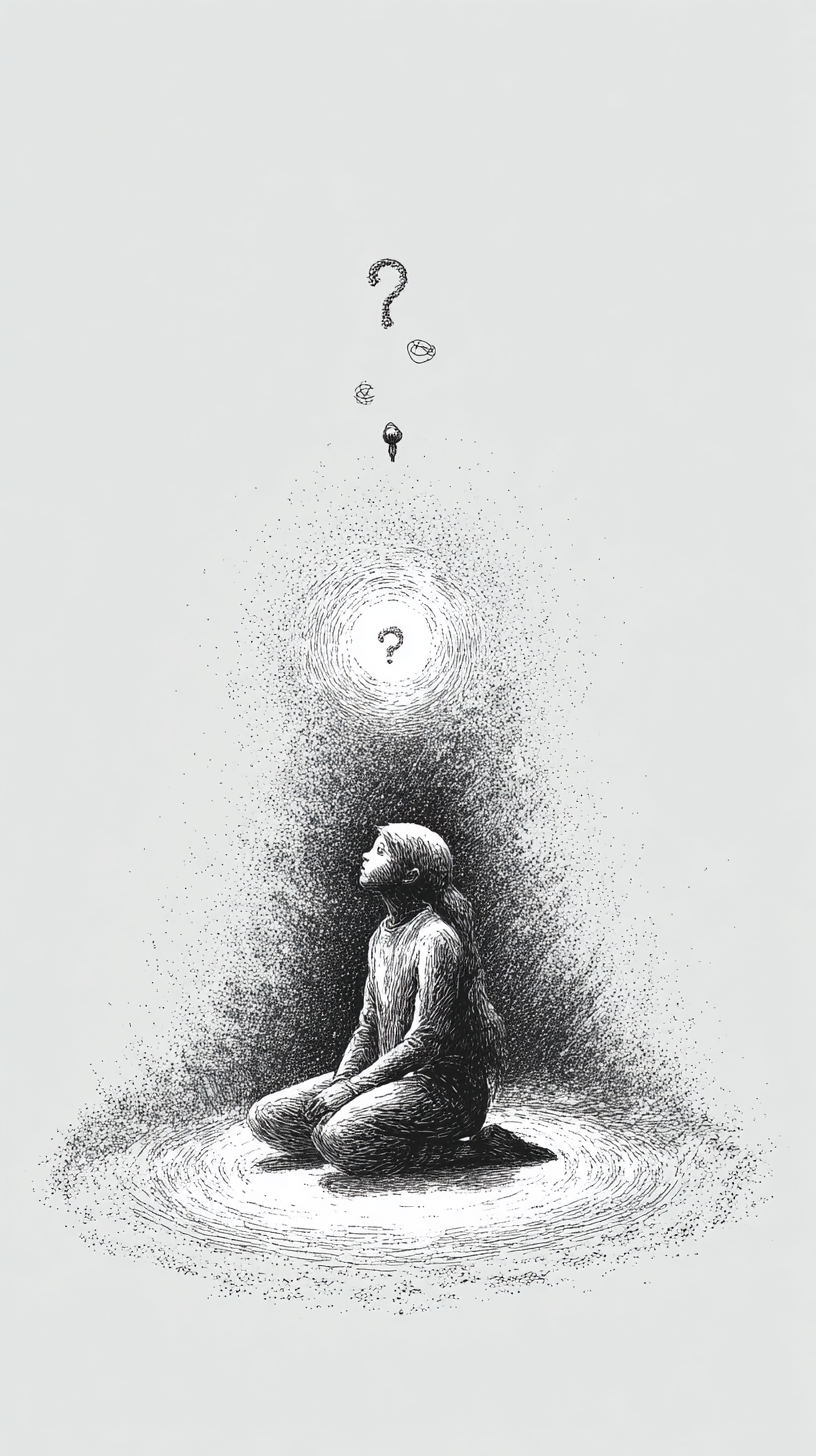
Reconnection Is Not a Big Revelation. It’s a Series of Small Permissions.
What helped me wasn’t a breakthrough moment. It was something quieter and far less impressive. It was learning to notice where I was still forcing myself to be okay.
Reconnection often begins in places that don’t look spiritual or emotional at all:
Letting your body finish a movement instead of rushing to the next one
Noticing when you hold your breath while listening to someone
Allowing yourself to enjoy something without turning it into productivity or meaning
Spending time where nothing is required of you, not even reflection
Connection returns through sensation before it returns through insight. Through warmth, pressure, rhythm, and ease. Through moments where the body realizes it doesn’t have to perform presence. It can simply arrive.
Practical Ways to Gently Come Back
Not as a checklist. As invitations.
Start by choosing experiences that ask very little of you but give something back physically. Walking without tracking. Sitting somewhere warm. Listening to music without analyzing it. Touching something textured. Letting your gaze soften instead of focusing.
Pay attention to what reduces the sense of distance, even briefly. Not what “helps” in theory, but what actually makes you feel a little more here.
And just as important, notice what deepens disconnection. Constant self-monitoring. Forcing positivity. Explaining yourself too much. Staying busy to avoid the quiet.
You don’t need to dig for answers. You need moments where your system can remember how it feels to be included.
You Are Not Lost. You Are Paused.
Feeling disconnected without knowing from what does not mean you’ve lost your way. Often, it means a part of you stepped back to survive a long season of demand.
That part doesn’t need to be dragged back into the light. It needs to be invited.
Slowly. Kindly. Without pressure to become anything other than present again.
Connection, when it returns, usually doesn’t announce itself. It shows up as a subtle sense of warmth. A deeper breath. A moment where life feels closer again.
And that is enough to begin.