
If You Think Mindfulness Means Calming Down, You’re Already Missing It
One of the most common things I hear when people come into this work is that they want to “feel calmer,” “release tension,” or “relax the body.” And while those can be outcomes, they are not where mindfulness begins. In fact, starting there often leads people in the wrong direction. Because mindfulness is not about changing what you feel. It is about becoming aware of what is already happening, even when what is happening is uncomfortable, uneven, or difficult to stay with.

What I see very often is that people try to use mindfulness as a way to escape sensation rather than understand it. They want to override tension, to soften it, to make it disappear. But if you move too quickly to change something, you lose the opportunity to see how it is being created in the first place. And without that awareness, the same patterns return, no matter how many techniques you apply.
Relaxation Without Awareness Is Just Another Form of Disconnection
There is a version of relaxation that looks and feels good on the surface, where the body becomes softer, breathing slows down, and there is a temporary sense of ease. But underneath that, nothing has actually reorganized. The same patterns are still there, the same habits of movement, the same ways of holding tension, only now they are quieter.
This is why people often say they feel better after a session or a practice, but the discomfort returns shortly after. It is not because the work failed. It is because awareness was not part of the process. The body was guided into a different state, but it did not learn how to recognize or change the pattern that created the tension in the first place.
Your Body Is Not Tight for No Reason
When someone tells me their body feels tight, I don’t immediately try to release it. I try to understand it. Tension is not random. It is a response. It is the body organizing itself in a way that feels necessary, even if it is not efficient.
Sometimes that tension is there to provide stability where there is none. Sometimes it is protecting an area that does not feel supported. Sometimes it is simply a habit that has been repeated so often that it has become automatic. But in all cases, it has a logic.
If you approach it with the goal of removing it as quickly as possible, you miss that logic entirely. And without understanding why the body is doing what it is doing, any change you create will be temporary.
Awareness Is Not Passive, It Requires Precision
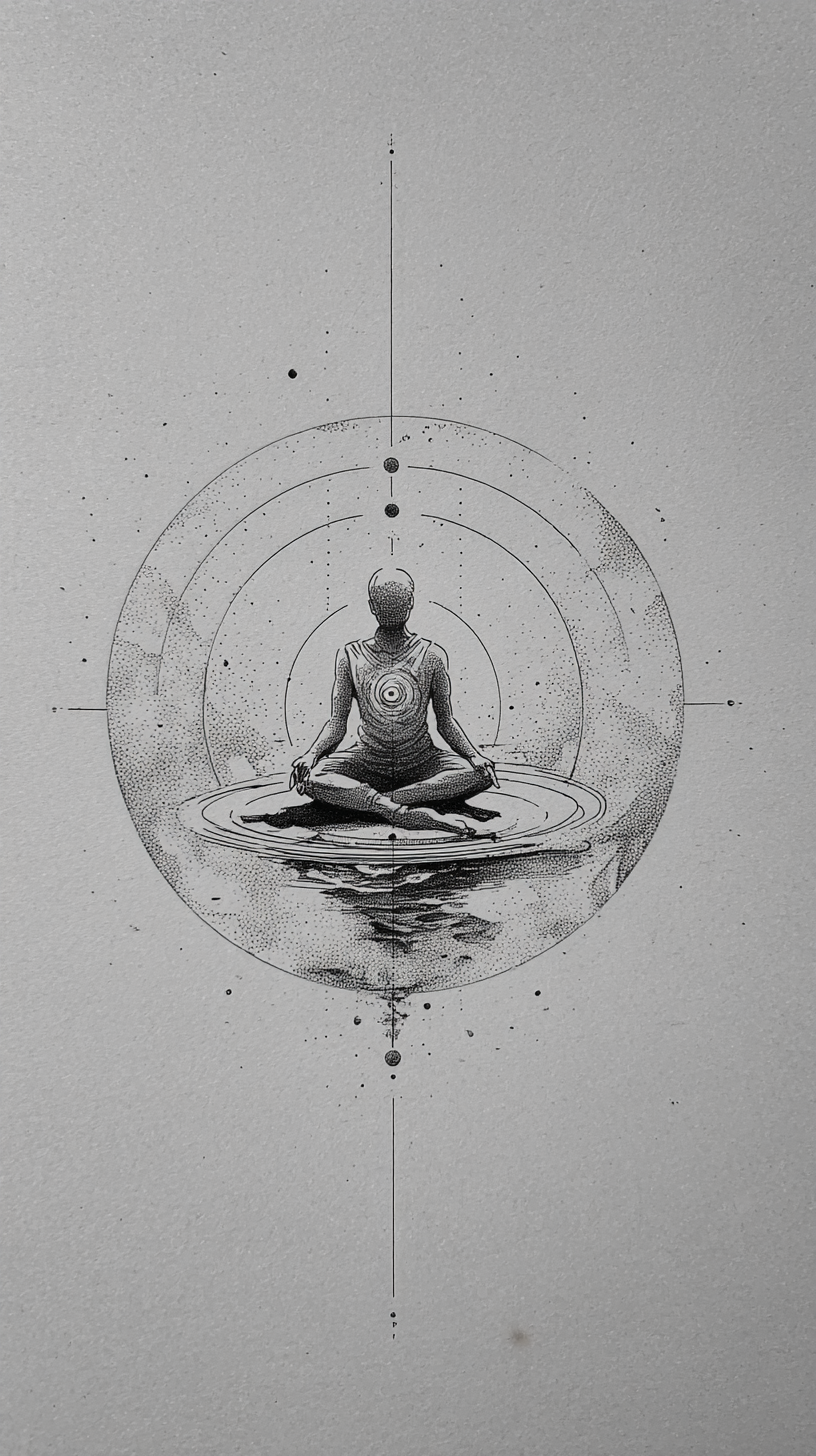
There is a misconception that mindfulness is soft, passive, or simply a matter of paying light attention. In reality, it requires a very specific kind of focus. You are not just noticing that something feels tight. You are noticing where it begins, how it changes, what triggers it, and how it interacts with the rest of the body.
This kind of awareness is active. It asks you to stay with sensation longer than you might want to, to observe without immediately reacting, and to differentiate between what is actually happening and what you assume is happening.
And this is where most people stop. Not because they cannot do it, but because it is unfamiliar. It is much easier to move away from discomfort than to stay present with it.
You Can Be Calm and Still Completely Disconnected
Calmness has become almost synonymous with progress, as if the absence of tension automatically means something has improved. But I have worked with many people who feel calm and still move in ways that create strain. Their breathing is slow, their muscles are not visibly tense, but their patterns have not changed.
This is where mindfulness and relaxation separate. Relaxation changes how you feel in the moment. Mindfulness changes how you understand what is happening. And without that understanding, the body continues to return to what it knows.
So the goal is not to become calm at all times. The goal is to become aware enough that you can recognize what your body is doing, even when it is not comfortable.
The Moment You Avoid Is the Moment You Need
In every session, there is usually a point where someone begins to lose clarity. It might be a movement that feels awkward, a sensation that is harder to place, or a moment where the body does not respond as expected. And almost immediately, there is a tendency to move past it, to adjust, to compensate, to return to something familiar.
But that moment is where the work is.
Because that is where the pattern is visible. That is where the body reveals what it does when it does not feel organized. And if you can stay there, even briefly, and observe what is happening without rushing to fix it, you begin to understand how to change it.
Mindfulness Is What Allows Change to Happen
Without awareness, change is mostly accidental. You might feel better for a while, you might move differently for a few days, but the system will return to its default patterns because nothing has interrupted them in a meaningful way.
Mindfulness is what interrupts those patterns. Not by forcing the body into something new, but by making the current pattern visible enough that it can no longer run automatically. Once you can feel what you are doing, you have a choice. And that choice is where change begins.
This is why I don’t start with relaxation. I start with awareness. Because once awareness is there, the body often begins to reorganize itself without being pushed.

This Is Not About Feeling Better Immediately
There is an expectation that any form of mindful or therapeutic work should lead to immediate relief. And sometimes it does. But if that is the only measure of success, you will miss the deeper shifts that take longer to develop.
Understanding your body, recognizing patterns, learning how to respond instead of react, these are not always comfortable processes. They require patience and a willingness to stay with what is not yet resolved.
But they also create change that lasts. Not because it was imposed, but because it was understood.
🌿 Here’s my final tip
The next time you notice tension in your body, resist the instinct to immediately release it. Stay with it for a moment and ask yourself what it is doing, where it begins, and how it changes when you move or breathe.
If you can understand it, you can change it.
Mantra:“I don’t rush to relax. I choose to understand.”
With mindfulness,
Elena